

Trump weighs return to large-scale strikes on Iran: “I have a big decision coming up”
The US president is weighing his next steps against Tehran ahead of a meeting with six Gulf leaders at the United Nations General Assembly. Washington is also expanding economic pressure on Iran, while allowing an Iranian delegation, including President Masoud Pezeshkian, to attend the UN gathering.
FOSTER! NEWS | WORLD
18 SEPTEMBER 2026
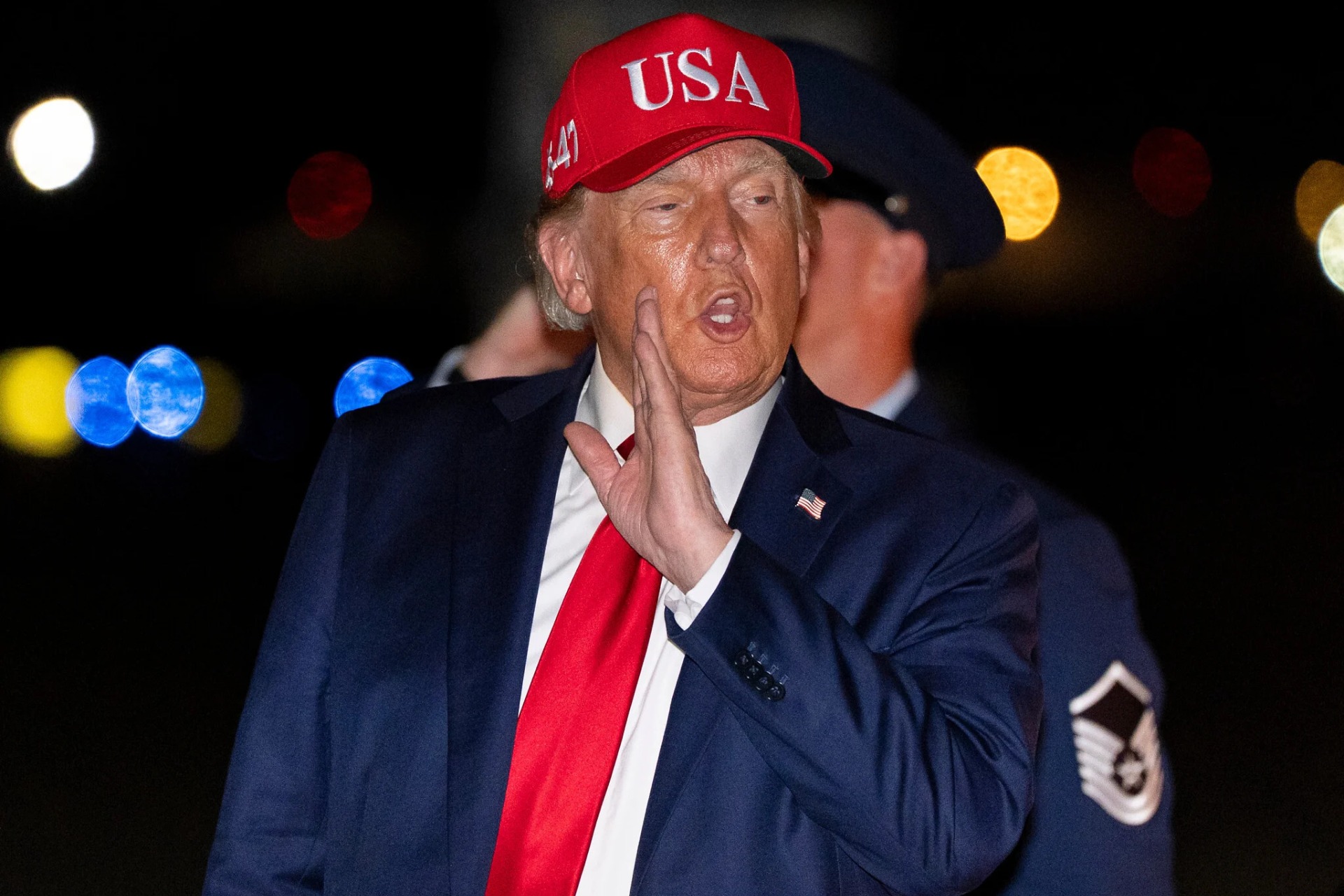
WASHINGTON / NEW YORK — The confrontation between the United States and Iran has entered another uncertain phase. President Donald Trump says he is approaching a major decision over the future of the US campaign against Tehran, including whether to resume large-scale military strikes.
Trump made the remarks on Thursday, 17 September, during a phone interview with journalist Barak Ravid of Israel's Channel 12 and Axios. He described the decision as a major one and left open the possibility of a renewed military escalation.
The comments came days before Trump was due to meet the leaders of Saudi Arabia, the United Arab Emirates, Qatar, Bahrain, Kuwait and Oman on the sidelines of the United Nations General Assembly in New York.
The meeting could become an important moment in determining the next phase of the confrontation.
THE DECISION TRUMP HAS ON THE TABLE
Trump said he was approaching a decision on whether the United States should return to a much larger military campaign against Iran.
During his conversation with Ravid, the president used particularly forceful language when discussing whether Washington should "annihilate" the Iranian regime or refrain from doing so. He then described the choice as a major decision and said that anything could happen.
The remarks do not amount to a public announcement that a new offensive has been ordered. According to Axios, Trump is considering different options as Washington seeks a way to bring the months-long conflict to an end.
The United States continues to maintain military forces in the Middle East. According to officials cited by Axios, Trump and Defense Secretary Pete Hegseth have ordered the current level of US forces in the region to remain in place through the end of the year, preserving Washington's ability to respond rapidly if the president decides to intensify operations.
The challenge facing Washington is also strategic. US officials have warned that maintaining the current military posture indefinitely is difficult without establishing a clear end state for the conflict.
THE SIX GULF STATES TRUMP WANTS TO HEAR FROM
Before deciding on his next move, Trump is expected to meet with the leaders of Saudi Arabia, the United Arab Emirates, Qatar, Bahrain, Kuwait and Oman in New York during the high-level week of the United Nations General Assembly.
Trump has said he wants to hear directly from the Gulf governments and assess how they are coping with the consequences of the conflict.
"I want to find out where they are and how they are doing," Trump said, according to Axios. He also said that the United States had been "very protective" of the Gulf states.
The meeting matters because these countries are not distant observers of the confrontation. Their territories, energy infrastructure and maritime routes are directly exposed to the consequences of any escalation between Washington and Tehran.
A renewed US offensive could also trigger further Iranian responses against regional targets, a concern that has previously influenced Washington's calculations.
THE STRAIT OF HORMUZ AT THE CENTRE OF THE CRISIS
One of the conflict's most important strategic points is the Strait of Hormuz, the narrow maritime passage between Iran and Oman through which a major share of the world's energy trade passes.
The confrontation surrounding the strait has consequences far beyond the Middle East. Disruption to maritime traffic has contributed to higher international energy prices and increased concerns over global supplies.
Washington has recently focused on increasing the movement of oil tankers through the strait. According to Axios, the United States has significantly increased tanker traffic, although the volume remains below pre-war levels.
The issue is not exclusively military. The longer maritime traffic remains restricted, the greater the potential impact on energy prices, transportation costs and inflation in economies around the world.
The Strait of Hormuz therefore represents one of the main points where the regional conflict intersects directly with the global economy.
WASHINGTON MAINTAINS ECONOMIC PRESSURE
While Trump considers the future of the military campaign, the United States continues to use sanctions as a major instrument of pressure against Tehran.
The administration has expanded measures aimed at restricting Iran's financial operations, particularly those associated with sanctions evasion, oil trading, maritime transportation and financial networks connected to the Iranian state.
Washington says the objective is to reduce Tehran's ability to generate and move funds that could support its military and regional structures.
Against that backdrop, the US Treasury Department announced new sanctions on 17 September targeting an Iranian digital-assets platform.
BITBANK BECOMES A NEW TARGET OF US SANCTIONS
The Office of Foreign Assets Control (OFAC), part of the US Treasury Department, sanctioned BitBank, an Iranian digital-assets exchange controlled by sanctioned Iranian financier Babak Zanjani.
According to the Treasury, BitBank played a role in a digital-assets-based financial infrastructure used to evade sanctions.
The US government also alleges that the platform processed payments connected to the safe passage of vessels through the Strait of Hormuz and routed hundreds of millions of dollars to entities linked to Iran's Islamic Revolutionary Guard Corps (IRGC).
These are allegations made by the US government and form part of the official justification for the sanctions.
The Treasury said BitBank was used to transfer funds connected with payments to Iran's newly established Hormuz Safe Marine Services Authority, an organisation linked to maritime payments and transit arrangements.
The move demonstrates that Washington's sanctions campaign is no longer focused solely on traditional banks and financial institutions. US authorities are also targeting digital infrastructure used to move money outside conventional financial channels.
OPERATION ECONOMIC OUTCAST
The new sanctions form part of Operation Economic Outcast, a broader US campaign intended to isolate Iran financially and disrupt its international networks.
According to the Treasury Department, the operation targets Iran's illicit oil trade, financial intermediaries, exchange houses, maritime shipping, aviation and front companies.
The inclusion of BitBank expands the campaign into the digital-assets sector.
The United States also sanctioned Pishtaz Simorgh Electronic Trade Company, identified as the software developer behind BitBank, as well as three individuals associated with Zanjani: Hossein Ali Zaker Hossein, Mohammad Mahdi Zaker Hossein and Seyed Adel Heidari.
The measures demonstrate how the confrontation between Washington and Tehran is increasingly being fought across several fronts simultaneously: military, maritime, energy, financial and technological.
BABAK ZANJANI AND IRAN'S FINANCIAL NETWORKS
Babak Zanjani is a longstanding figure associated with Iranian financial networks targeted by international sanctions.
Iranian authorities sentenced him to death in 2016 over embezzlement-related offences. His sentence was later commuted, and he subsequently re-emerged publicly in connection with economic projects linked to the Iranian government.
For Washington, Zanjani is associated with networks used to maintain Iranian financial channels despite international restrictions.
The use of digital-assets platforms adds a technological dimension to the dispute. The United States is seeking to prevent cryptocurrencies and other digital financial mechanisms from becoming alternative channels for accessing the international financial system.
The BitBank case therefore illustrates how the confrontation has expanded well beyond conventional military operations.
IRAN WILL BE ALLOWED TO ATTEND THE UN GENERAL ASSEMBLY
Amid the escalation, the United States has confirmed that an Iranian delegation will be permitted to attend the high-level week of the United Nations General Assembly (UNGA) in New York.
The decision includes Iranian President Masoud Pezeshkian and Foreign Minister Abbas Araghchi, according to sources cited by Reuters.
The US State Department said the decision was consistent with Washington's obligations as the host country of the United Nations headquarters.
The Iranian delegation will nevertheless face restrictions. Washington said it will be smaller than last year's delegation and that its members will remain subject to travel restrictions and limitations on the purchase of certain goods, including luxury products.
The decision is significant because the United States and Iran remain engaged in a major confrontation.
The General Assembly will therefore provide a diplomatic setting in which representatives of countries involved in a military conflict can appear in the same international forum while their governments continue to negotiate, pressure and confront one another elsewhere.
PEZESHKIAN ARRIVES IN NEW YORK AMID THE CONFLICT
The expected presence of President Masoud Pezeshkian adds another political dimension to the UN gathering.
The Iranian president will be able to participate personally in high-level UN activities while remaining subject to US restrictions.
Foreign Minister Abbas Araghchi is also expected to attend, giving Tehran an opportunity to present its position on the conflict before the international community.
The US decision does not represent an easing of sanctions against Iran or a change in Washington's position towards the Iranian government. It is a limited authorisation within the framework of the United States' obligations as host country of the United Nations.
THE MAHMOUD ABBAS CASE AND A TENSE GENERAL ASSEMBLY
The decision concerning Iran comes alongside a very different US decision regarding the Palestinian leadership.
Washington denied entry to Palestinian Authority President Mahmoud Abbas and other Palestinian officials seeking to attend the General Assembly in person.
As a result, Abbas is expected to address the UN remotely rather than travel to New York.
The General Assembly authorised his participation by video conference. The vote was 152 in favour, three against and four abstentions.
The US State Department cited its objections to actions by the Palestinian Authority, including efforts to pursue the Israeli-Palestinian conflict through international legal institutions. Palestinian officials rejected that characterisation and defended their diplomatic and legal initiatives.
The contrast between the two decisions will be part of the diplomatic backdrop to this year's General Assembly: an Iranian delegation will travel to New York under restrictions, while the Palestinian president will participate remotely.
A WAR BETWEEN ESCALATION AND NEGOTIATION
The situation facing Washington combines two apparently opposing dynamics.
On one side, Trump continues to leave open the possibility of renewed large-scale strikes, while the United States maintains military forces in the region capable of supporting such operations.
On the other, the administration continues to discuss a negotiated way forward and has maintained channels of communication with Tehran.
Trump told Axios that Iran remains in direct contact with the United States and that Iranian officials still want to reach an agreement.
The result is a confrontation in which military and economic pressure continues while the final outcome remains unresolved.
The central question is what conditions could transform that pressure into an agreement and what guarantees Washington and Tehran would require for a lasting settlement.
THE GULF FACTOR AND THE RISK OF FURTHER ESCALATION
The positions of Saudi Arabia, the United Arab Emirates, Qatar, Bahrain, Kuwait and Oman have become increasingly important because a new military campaign could expose their territories and strategic infrastructure to retaliation.
The events of recent months have demonstrated how quickly a direct confrontation between Washington and Tehran can acquire a broader regional dimension.
A renewed US offensive could lead to further attacks against military bases, energy infrastructure, shipping routes or strategic facilities belonging to countries aligned with Washington.
That is why Trump intends to hear from the Gulf governments before publicly defining his next move.
The New York meeting could provide additional information for Washington as it weighs renewed military action against continued diplomatic pressure.
THE OIL VARIABLE
The conflict also has a global economic dimension.
The Strait of Hormuz is one of the world's most important energy corridors. Disruption to shipping through the waterway has contributed to higher oil prices and increased concerns about inflation and energy supplies.
Washington is seeking to restore greater tanker traffic through the strait, but shipping volumes remain below pre-conflict levels.
This means that a renewed military escalation would not be confined to the battlefield.
A major attack against Iran could have immediate consequences for energy markets, maritime routes and economies dependent on imported hydrocarbons.
THE DECISION AHEAD
Trump has not publicly established whether he will make his decision before or after the US midterm elections scheduled for November.
It also remains unclear whether he will meet Israeli Prime Minister Benjamin Netanyahu during his time in New York, although Trump indicated to Axios that such a meeting could take place.
Meanwhile, the White House is also considering what the region could look like after the conflict.
According to Axios, the administration is developing an early framework for the post-war period that could include greater regional coordination to contain Iran and further efforts towards normalisation between Israel and other Middle Eastern countries.
The discussion in Washington is therefore no longer limited to how the war might continue. It is also beginning to focus on what the regional order could look like after the fighting.
A CRITICAL WEEK IN NEW YORK
The next United Nations General Assembly will take place against an extraordinary backdrop.
Iranian representatives will be present under US restrictions. Mahmoud Abbas will participate remotely. The leaders of six Gulf states are expected to meet with Trump. Washington will continue imposing economic sanctions on Tehran while maintaining its military presence across the Middle East.
All of this will take place while the central question of the conflict remains unresolved: how the war ends and under what conditions.
Trump has left open the possibility of a renewed large-scale offensive, while also keeping the door open to negotiations.
The meeting with the Gulf leaders could provide new information for that decision. The situation in the Strait of Hormuz, pressure on global energy markets, Iran's financial capabilities and the state of diplomatic contacts will all be important factors.
For now, Washington's message is one of strategic uncertainty.
"I have a big decision coming up," Trump said.
In New York, that decision may begin to take shape.
FOSTER! NEWS
Clear facts. Real context.