

The next world order will be built before it is announced
The balance of power is already changing as nations, institutions and emerging alliances begin shaping the system that will define the decades ahead.
FOSTER! NEWS | ANALYSIS
15 SEPTEMBER 2026
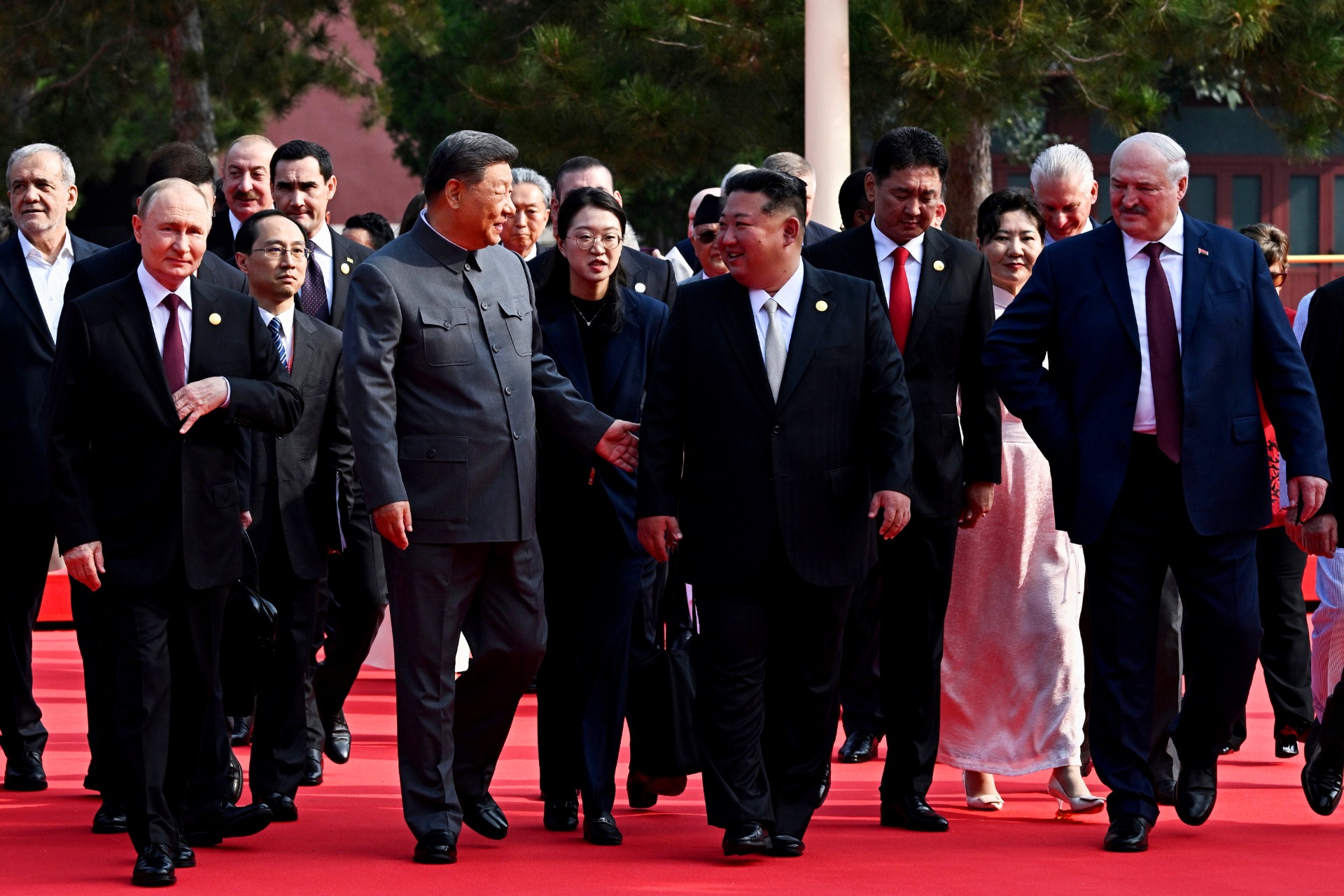
THE NEW ORDER IS ALREADY TAKING SHAPE
There is a tendency to imagine that a new world order begins with a dramatic event: a treaty, a war, the collapse of an alliance or the declaration of a new international system.
History rarely works that way.
Major transformations usually begin before they acquire a name.
They emerge through new trade routes, financial arrangements, diplomatic coalitions, technological standards, military partnerships and institutions that gradually acquire influence.
That process is already visible.
BRICS is expanding its role. India is pursuing strategic autonomy. China is advocating a more multipolar international system. Europe is accelerating its efforts to reduce strategic dependencies. The United States remains the world's most powerful military and financial actor, but increasingly operates in an environment where other states have more options.
The emerging system is therefore unlikely to be a simple replacement of one dominant power by another.
It is more likely to be a more fragmented, competitive and negotiated international order.
And much of it is being built before governments officially announce what it is becoming.
BRICS IS BUILDING AN ALTERNATIVE PLATFORM
The latest BRICS summit in New Delhi offered one of the clearest demonstrations of this transition.
Leaders meeting on 12–13 September adopted the New Delhi Declaration, committing themselves to a more representative international system and calling for reforms to global governance and international financial institutions. The declaration specifically argues that the institutions created decades ago need to reflect the transformation of the global economy.
The significance goes beyond the language of the communiqué.
BRICS is attempting to create practical mechanisms around trade, finance, digital technology, artificial intelligence and development.
China's Xi Jinping proposed deeper cooperation in areas including artificial intelligence, digital industries and manufacturing, while the bloc discussed greater use of local currencies and digital payment infrastructure.
None of this means that BRICS has created a coherent alternative to the Western-led system.
It has not.
Its members have different political systems, economic interests and strategic priorities. India and China remain competitors. Gulf states maintain relationships with Washington. Brazil has its own diplomatic priorities. Russia's confrontation with the West is fundamentally different from the interests of countries seeking greater economic flexibility.
But that may not be the point.
A new system does not need to begin as a unified alliance.
It can begin as a network of alternatives.
INDIA IS SHOWING HOW MIDDLE POWERS CAN OPERATE
India may be one of the most important examples of the emerging model.
New Delhi is simultaneously strengthening relationships with the United States and Europe while maintaining strategic ties with Russia and engaging China through BRICS and bilateral diplomacy.
The recent meeting between Narendra Modi and Xi Jinping during the BRICS summit illustrated this approach. The two governments are attempting to stabilise relations while major differences remain over their border, trade and strategic competition.
India's strategy is not traditional alignment.
It is strategic autonomy.
That distinction matters.
For decades, international politics was often described through blocs. Countries were expected to be closer to one major power or another.
The emerging environment gives countries like India more room to operate between competing centres.
Chatham House noted before the BRICS summit that the wars in Ukraine and Iran, continuing US-China rivalry and the return of Donald Trump to the presidency had made India's long-standing approach of strategic hedging increasingly relevant to modern international relations.
If other middle powers adopt similar strategies, the result will be a world that is considerably harder for any single bloc to control.
CHINA IS BUILDING POWER THROUGH SYSTEMS
China's challenge to the existing order is not limited to military power.
Beijing is investing in infrastructure, manufacturing, digital systems, artificial intelligence, trade relationships and financial mechanisms.
That gives China several different ways to expand its influence simultaneously.
At the BRICS summit, Xi promoted proposals including a BRICS AI Open Source Zone and deeper economic integration. China is also due to assume the BRICS chairmanship after India.
This matters because the next international order will not be determined only by aircraft carriers or nuclear weapons.
It will also depend on:
- who controls critical technologies;
- who sets technical standards;
- who supplies industrial components;
- who controls strategic infrastructure;
- who finances development;
- who provides digital platforms;
- and who can offer countries alternatives.
Power is becoming increasingly systemic.
THE UNITED STATES STILL HAS ENORMOUS POWER
The rise of other centres should not be confused with the disappearance of American power.
The United States remains central to global finance, military alliances, advanced technology, energy markets and international security.
The dollar remains deeply embedded in international trade and finance, despite efforts by BRICS countries to increase the use of national currencies and develop alternative payment mechanisms. Analysts continue to point to the enormous structural advantages of the existing dollar-based system.
But the strategic question has changed.
It is no longer whether Washington has power.
It is whether that power can produce the same level of influence in a world where other countries increasingly have alternative partners.
That is a much more complicated proposition.
EUROPE IS TRYING TO BECOME LESS DEPENDENT
Europe is confronting the same structural reality from another direction.
The European Union is increasingly describing strategic autonomy not as isolation, but as the ability to act independently when necessary.
The European Commission has identified reducing strategic dependencies, strengthening defence, supporting Ukraine, expanding global partnerships and protecting European competitiveness as central priorities.
The European Council has also linked competitiveness with economic security, technological innovation, resilience and reducing dependencies.
This is a major shift in thinking.
For much of the post-Cold War era, European prosperity was built around deep economic interdependence and the assumption that the broader international environment would remain relatively stable.
That assumption has weakened.
Europe is now asking a different question:
What must we be able to do ourselves?
THE GLOBAL SOUTH IS BECOMING A POWER CENTRE
The most significant structural change may be the growing influence of countries that do not want to choose between Washington and Beijing.
The term Global South covers countries with radically different political and economic systems, so it should not be treated as a single bloc.
But many share a common complaint:
The institutions of global governance do not adequately reflect today's distribution of population, economic weight and political influence.
The latest BRICS declaration explicitly calls for greater representation of emerging and developing economies in international institutions, including reforms to the Bretton Woods system. It also describes the Global South as a driver of positive change in the international system.
Xi Jinping has made a similar argument, describing the collective rise of the Global South as a key driver of multipolarity.
The important point is not whether Beijing's vision is accepted.
It is that the demand for greater representation is becoming harder to ignore.
THE UNITED NATIONS IS BEING ASKED TO CHANGE
The pressure is also reaching the United Nations.
The 81st session of the General Assembly opened on 8 September 2026 under the theme of restoring trust and managing transformation so that the UN can deliver for all. Its priorities include renewed multilateralism, UN reform, digital governance and inclusive global governance.
Security Council reform has been under intergovernmental negotiation for years.
The fundamental problem remains straightforward.
The Council's permanent membership reflects the geopolitical structure created after the Second World War.
The world it governs has changed dramatically since then.
The question is no longer whether reform is intellectually justified.
The difficult question is which countries should gain influence, and which existing powers are prepared to share it.
That is where reform becomes political.
ARTIFICIAL INTELLIGENCE COULD BECOME PART OF THE NEW ORDER
The next international system will also be built inside technologies that did not exist when today's institutions were created.
Artificial intelligence is already becoming a strategic issue between the United States and China.
Washington views advanced AI capabilities, chips and computing infrastructure partly through the lens of national security.
Beijing is developing its own regulatory framework while promoting international cooperation and a broader model of AI governance.
The disagreement is no longer simply about who develops the most powerful models.
It is about who establishes the rules governing them.
China has recently promoted its own approach to international AI governance, while US technology leaders and policymakers have argued that maintaining American leadership is strategically important.
If AI becomes fundamental to defence, finance, manufacturing, communications and government, control over its standards could become comparable to control over strategic infrastructure.
That means the next world order may be partly written in code.
TRADE IS BECOMING AN INSTRUMENT OF POWER
Globalisation once encouraged the idea that economic interdependence would reduce geopolitical conflict.
The opposite is increasingly visible.
Trade relationships can now be used as instruments of pressure.
Tariffs, export controls, sanctions and restrictions on strategic technologies have become part of the geopolitical vocabulary.
The IMF has warned that global economic imbalances, trade tensions and changing trade relationships are contributing to economic fragmentation. At the same time, it continues to stress the importance of international cooperation in managing debt, spillovers and global imbalances.
This creates a difficult contradiction.
Countries want resilience.
But resilience can become fragmentation.
They want secure supply chains.
But duplication is expensive.
They want strategic autonomy.
But no major economy can completely isolate itself.
The next order will therefore be built around a constant tension between interdependence and independence.
ENERGY IS ALSO BEING REWIRED
Energy provides another example.
The war in the Middle East has demonstrated how vulnerable global energy systems remain to geopolitical disruption.
The Strait of Hormuz remains a critical chokepoint, while governments and companies are examining alternative routes and infrastructure.
The search for alternatives is not simply an economic exercise.
It is strategic planning.
Pipelines, LNG terminals, electricity grids, renewable energy, nuclear power and critical minerals all influence the ability of states to withstand external pressure.
Energy security is therefore becoming another pillar of strategic autonomy.
THE WORLD IS NOT BECOMING BIPOLAR
The temptation is to describe the emerging system as a new Cold War between the United States and China.
That description captures part of reality.
But it misses something important.
Unlike the Cold War, today's major powers operate inside an intensely interconnected global economy.
India does not want to become China's ally.
Europe does not want to become economically dependent on either Washington or Beijing.
Gulf states maintain relationships with multiple powers.
African countries are negotiating with China, Europe, the United States, Russia, India and the Gulf.
Latin America is seeking investment and markets from several directions.
This is not a clean division into two camps.
It is closer to a multi-centre system of competing partnerships.
THE NEW POWER IS THE ABILITY TO CHOOSE
In the emerging order, influence may increasingly belong to countries that can say:
No — we have another option.
Another investor.
Another supplier.
Another market.
Another security partner.
Another financial institution.
Another technology platform.
Another diplomatic forum.
That is why infrastructure, trade agreements and financial networks matter so much.
They create choices.
And choices create strategic autonomy.
THE SYSTEM WILL BE BUILT FROM BELOW
The most important change may therefore happen without a dramatic declaration.
A payment system is created.
A regional development bank expands.
A new trade corridor opens.
A country joins a new partnership.
A technology standard becomes widely adopted.
A new defence arrangement is signed.
A critical mineral supply chain moves.
An international institution changes its voting structure.
Individually, each decision can appear technical.
Together, they alter the distribution of power.
That is how international systems are constructed.
WHAT WILL THE NEW ORDER LOOK LIKE?
There is no single answer.
It may not have a capital.
It may not have a single ideology.
It may not have one dominant institution.
It may instead consist of overlapping networks.
Washington will remain indispensable.
China will remain a central economic and technological power.
Europe will attempt to become more strategically autonomous.
India will continue to expand its diplomatic space.
Russia will retain significant military and energy influence.
The Gulf will continue to increase its strategic importance.
Africa will demand greater representation.
Latin America will seek greater room for manoeuvre.
And institutions such as the UN, G20, BRICS, IMF and World Bank will continue competing, adapting and negotiating within this increasingly complex environment.
The result could be unstable.
But it could also create a more distributed system of international power.
THE DANGER OF A WORLD WITHOUT COMMON RULES
Multipolarity does not automatically mean stability.
More centres of power can mean more competition.
More diplomatic options can also mean more opportunities for confrontation.
If major powers disagree about the rules of trade, technology, sovereignty, security and international law, the result could be a world where agreements become increasingly difficult to enforce.
That would be dangerous.
The objective cannot simply be to redistribute power.
It must also be to preserve mechanisms capable of managing disagreement.
That is why institutions still matter.
THE NEXT ORDER WILL BE BUILT BEFORE IT IS ANNOUNCED
The world does not need to wait for a new treaty to declare that the international system has changed.
The transformation is already visible.
In BRICS.
In India's strategic autonomy.
In China's global initiatives.
In Europe's search for independence.
In the Global South's demand for representation.
In the debate over UN reform.
In the struggle over AI.
In the restructuring of energy and supply chains.
In the growing importance of alternative financial mechanisms.
None of these developments alone constitutes a new world order.
Together, they reveal its foundations.
The defining competition of the next decade may therefore not be between one country and another.
It may be between different visions of how the world should be organised.
One vision seeks to preserve institutions created during an earlier era.
Another seeks to reform them.
Others are building alternatives alongside them.
And some are trying to combine both approaches.
The outcome remains uncertain.
But one thing is increasingly clear:
The next world order will not arrive as a finished product.
It will be built piece by piece — long before anyone officially announces that it has arrived.
FOSTER! ANALYSES
The great geopolitical mistake is to look only at the moments when history announces itself.
The deeper transformation happens beforehand.
It happens when countries change their trading partners.
When financial systems develop alternatives.
When alliances become more flexible.
When technology becomes strategic infrastructure.
When emerging powers demand representation.
When institutions begin to change.
The next world order is therefore not a distant possibility.
It is already under construction.
The question is no longer whether the old system will change.
The question is:
Who will build what comes next — and what rules will govern it?
FOSTER! NEWS
Clear facts. Real context.