

The new space race is changing what humanity can build beyond Earth
The Moon, commercial space stations, reusable spacecraft and an expanding orbital economy are transforming space from a destination for exploration into a new frontier for science, industry and global power.
FOSTER! NEWS | SPACE
15 SEPTEMBER 2026
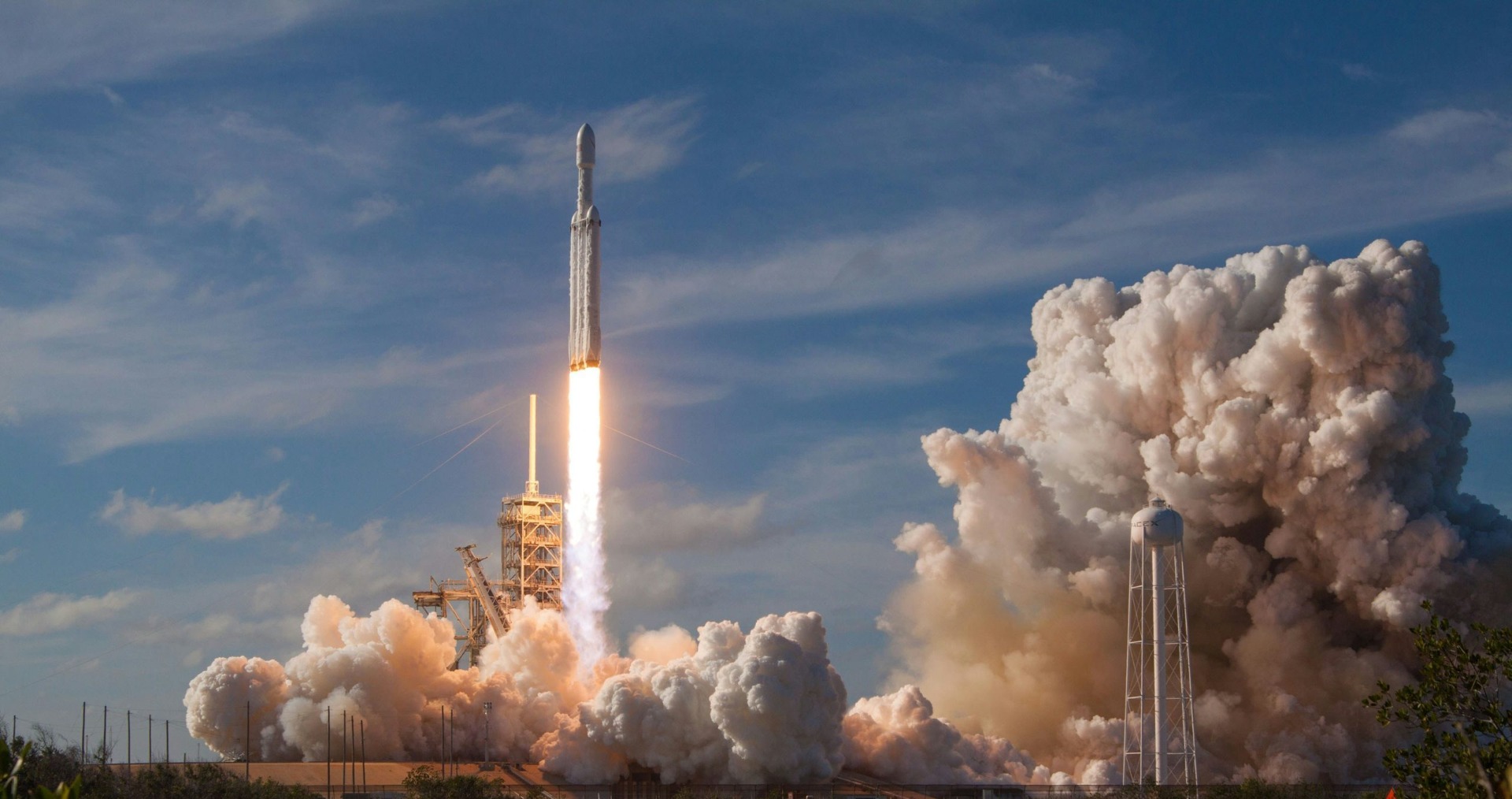
SPACE IS NO LONGER JUST ABOUT REACHING THE STARS
For most of the space age, the objective was simple.
Reach orbit.
Reach the Moon.
Send probes to distant planets.
Observe the universe.
Today, the ambition is changing.
Governments and private companies are building systems designed not only to reach space, but to operate there for longer periods of time.
The Moon is becoming a destination for sustained exploration.
Low Earth orbit is evolving into a commercial environment.
Robotic missions are expanding scientific knowledge.
And private companies are developing technologies that could change how materials, medicines and other products are manufactured beyond Earth.
Space is becoming an ecosystem.
THE MOON IS BACK AT THE CENTRE
The Moon has returned to the centre of human exploration.
NASA's Artemis programme is designed to establish a sustained human presence around and on the lunar surface, while using the Moon as part of a longer-term path towards Mars.
In April 2026, Artemis II completed a crewed flight around the Moon, carrying NASA astronauts Reid Wiseman, Victor Glover and Christina Koch, together with Canadian astronaut Jeremy Hansen.
The mission travelled farther from Earth than any previous crewed spacecraft.
The significance extends beyond the flight itself.
Artemis II demonstrated that human missions beyond low Earth orbit are once again becoming operational reality.
The next objective is more ambitious.
THE RETURN TO THE LUNAR SURFACE
NASA currently targets Artemis IV for the first lunar landing of this new phase of exploration in 2028.
The mission is expected to use a commercial human landing system to transport astronauts from lunar orbit to the surface.
The return to the Moon is therefore not simply a repeat of Apollo.
The objective is to establish infrastructure, develop scientific capabilities and create the foundations for longer-term exploration.
That changes the question.
It is no longer only:
Can humans return to the Moon?
It is:
Can humans build a sustainable presence there?
THE MOON IS BECOMING A SCIENTIFIC LABORATORY
The lunar surface contains information about the early history of the Solar System.
Its geology preserves evidence of impacts and processes that have been erased or altered on Earth.
NASA is also developing instruments designed to study the lunar environment.
One example is the Lunar Environment Monitoring Station, designed to monitor seismic activity and surface motion near the lunar south pole.
The scientific value of the Moon therefore extends far beyond exploration.
It could become one of the most important natural laboratories available to planetary scientists.
SPACE EXPLORATION IS BECOMING MORE INTERNATIONAL
The next phase of exploration is not being built by one country alone.
The Artemis Accords now involve dozens of nations committed to principles for peaceful and transparent civil space exploration.
NASA said in September 2026 that 71 countries had signed the accords, with Djibouti becoming the 72nd signatory.
This growing network reflects a broader reality.
Space exploration is becoming increasingly international.
But international cooperation does not eliminate competition.
It exists alongside a rapidly expanding race for technological and strategic capability.
EUROPE WANTS A LARGER ROLE
Europe is also attempting to strengthen its position.
The European Space Agency has recently expanded cooperation with private companies working on future commercial space stations and cargo transportation.
ESA has signed agreements with Axiom Space and Starlab concerning the post-ISS era and has awarded a contract to The Exploration Company for its Nyx autonomous cargo vehicle under the ALADDIN programme.
The objective is significant.
Europe wants reliable access to low Earth orbit and greater strategic autonomy in space.
THE END OF THE INTERNATIONAL SPACE STATION ERA
The International Space Station has represented one of the most important examples of international scientific cooperation.
But its era is approaching its conclusion.
The next generation of orbital infrastructure is expected to involve a greater role for commercial companies.
Private stations are being developed as potential successors to the ISS.
That could transform low Earth orbit from a predominantly government-operated environment into a mixed ecosystem of governments, companies, researchers and commercial customers.
The consequences could be enormous.
THE ORBITAL ECONOMY IS BEGINNING TO EMERGE
Space is becoming a commercial market.
Satellites already support communications, navigation, weather forecasting, Earth observation and other services.
But a new category is emerging:
manufacturing in space.
Microgravity can create conditions that are difficult or impossible to reproduce on Earth.
Companies are investigating applications involving pharmaceuticals, biotechnology, advanced materials and fibre optics.
Reuters reported in September 2026 that Space Cargo had become the first European customer for SpaceX's Starfall programme, with a planned 2028 mission designed to return materials produced or researched in microgravity.
This could become one of the most important developments in the commercial space economy.
WHY MANUFACTURING IN MICROGRAVITY MATTERS
Some industrial processes behave differently without Earth's gravity.
Materials can mix differently.
Crystals can form under different conditions.
Biological processes can be studied in new ways.
The challenge has always been economics.
Launching equipment into orbit is expensive.
Returning products to Earth is even more complicated.
Reusable launch systems and commercial re-entry vehicles could begin changing that equation.
If the cost falls sufficiently, orbital manufacturing could move from experimental research to commercial production.
REUSABLE SPACECRAFT ARE CHANGING THE EQUATION
The economics of space depend heavily on transportation.
Every kilogram sent into orbit requires energy, infrastructure and a launch vehicle.
Reusable spacecraft can potentially reduce those costs by allowing vehicles or components to fly multiple times.
The development of reusable systems is therefore not simply an engineering achievement.
It is an economic transformation.
Lower transportation costs can make more missions financially viable.
And more missions create the possibility of a larger space economy.
SATELLITES ARE BECOMING DIGITAL INFRASTRUCTURE
Modern societies already depend heavily on satellites.
Communications.
Navigation.
Weather forecasting.
Agriculture.
Disaster monitoring.
Military operations.
Financial systems.
Environmental observation.
The growth of satellite constellations is increasing the amount of infrastructure operating above Earth.
That creates new opportunities.
But it also creates new vulnerabilities.
Space infrastructure is increasingly becoming part of national security.
SPACE IS BECOMING A GEOPOLITICAL DOMAIN
The strategic importance of space is growing because so much of modern power depends on orbital infrastructure.
Military communications rely on satellites.
Navigation systems depend on space-based signals.
Earth observation provides intelligence and environmental information.
And commercial networks increasingly depend on orbital connectivity.
This means countries are investing not only in exploration.
They are investing in space security.
The competition is moving beyond rockets.
It is becoming a competition over infrastructure, communications, data and technological sovereignty.
THE RACE IS NO LONGER ONLY BETWEEN NATIONS
One of the biggest changes in the new space race is the role of private companies.
SpaceX, Blue Origin and other companies are developing launch systems, spacecraft, satellite networks and commercial services.
Private investment is increasingly shaping the direction of the industry.
Reuters reported in September that defence and space companies were increasingly turning to SPAC transactions as investors sought exposure to the expanding sector.
The boundaries between public and private space activity are becoming increasingly difficult to define.
MARS REMAINS THE LONG-TERM OBJECTIVE
The Moon may be the next major destination.
Mars remains the larger ambition.
NASA explicitly describes Artemis as part of a broader strategy for lunar exploration and future human missions to Mars.
But reaching Mars is fundamentally more difficult.
The distance is enormous.
Travel times are measured in months.
Radiation exposure becomes a serious concern.
Communication delays prevent real-time control.
And a crew travelling to Mars would need life-support systems capable of operating far from Earth.
The technology required will have to be significantly more advanced than that used for lunar missions.
THE SEARCH FOR LIFE CONTINUES
Space exploration is also driven by one of humanity's oldest scientific questions:
Are we alone?
Mars remains a major target.
So do the icy moons of the outer Solar System.
Europa, Enceladus and other worlds may contain environments capable of supporting some form of life.
Meanwhile, powerful telescopes are allowing scientists to study planets orbiting other stars.
The search is no longer limited to our immediate neighbourhood.
Humanity is beginning to examine the wider galaxy for signs of potentially habitable environments.
TELESCOPES ARE CHANGING OUR VIEW OF THE UNIVERSE
Modern space observatories can see deeper and farther into the universe than previous generations.
The result is a constant stream of discoveries involving galaxies, stars, planets, black holes and the early universe.
ESA's scientific fleet includes missions such as Webb, Euclid, Solar Orbiter, JUICE, CHEOPS and BepiColombo.
These missions are not simply producing spectacular images.
They are generating data that can challenge existing models of how the universe formed and evolved.
THE NEXT FRONTIER IS ALSO COMMERCIAL
The space industry is increasingly moving from government programmes towards commercial markets.
Launch services.
Satellite communications.
Earth observation.
Orbital manufacturing.
Private astronaut missions.
Commercial space stations.
Cargo transportation.
These markets could grow together.
A larger commercial ecosystem can support more launches.
More launches can reduce costs.
Lower costs can attract new customers.
And new customers can create demand for additional infrastructure.
That feedback loop could accelerate the expansion of the space economy.
SPACE WILL ALSO TEST HUMAN COOPERATION
The expansion of human activity beyond Earth creates questions that cannot be answered by technology alone.
Who controls resources?
How are activities coordinated?
How should lunar infrastructure be protected?
What happens when commercial interests and national interests collide?
How are scientific discoveries shared?
And what rules apply when more countries and companies operate in the same orbital environment?
These questions are becoming increasingly important as activity accelerates.
THE NEXT SPACE AGE WILL BE DIFFERENT
The first space age was dominated by governments.
The next one will be more complex.
Governments will remain essential.
But companies, universities, investors and international organisations will increasingly shape the direction of exploration.
The Moon will become a scientific and strategic destination.
Low Earth orbit will become more commercial.
Robotic exploration will expand.
And space-based infrastructure will become increasingly integrated into life on Earth.
The boundary between Earth and space is becoming thinner.
FOSTER! ANALYSES
The new space race is not simply a race to reach farther.
It is a race to build.
Build launch systems.
Build spacecraft.
Build lunar infrastructure.
Build commercial stations.
Build satellite networks.
Build laboratories.
Build new industries.
And eventually, perhaps, build the foundations of human settlement beyond Earth.
The significance of the current transformation is therefore economic and scientific as much as it is exploratory.
Humanity is moving from an era in which space was something governments visited to one in which space could become an environment where governments, companies and researchers operate continuously.
The Moon is becoming a destination.
Orbit is becoming an economy.
Mars remains a long-term objective.
And the technologies being developed today could determine how far humanity goes tomorrow.
The next great chapter of space exploration will not be defined by a single launch.
It will be defined by what humanity builds after reaching the frontier.
FOSTER! NEWS
Clear facts. Real context.