

The Middle East is reshaping the new world order
War, energy, maritime routes and competing alliances are transforming the Middle East into one of the most consequential arenas of global power.
FOSTER! NEWS | MIDDLE EAST
15 SEPTEMBER 2026
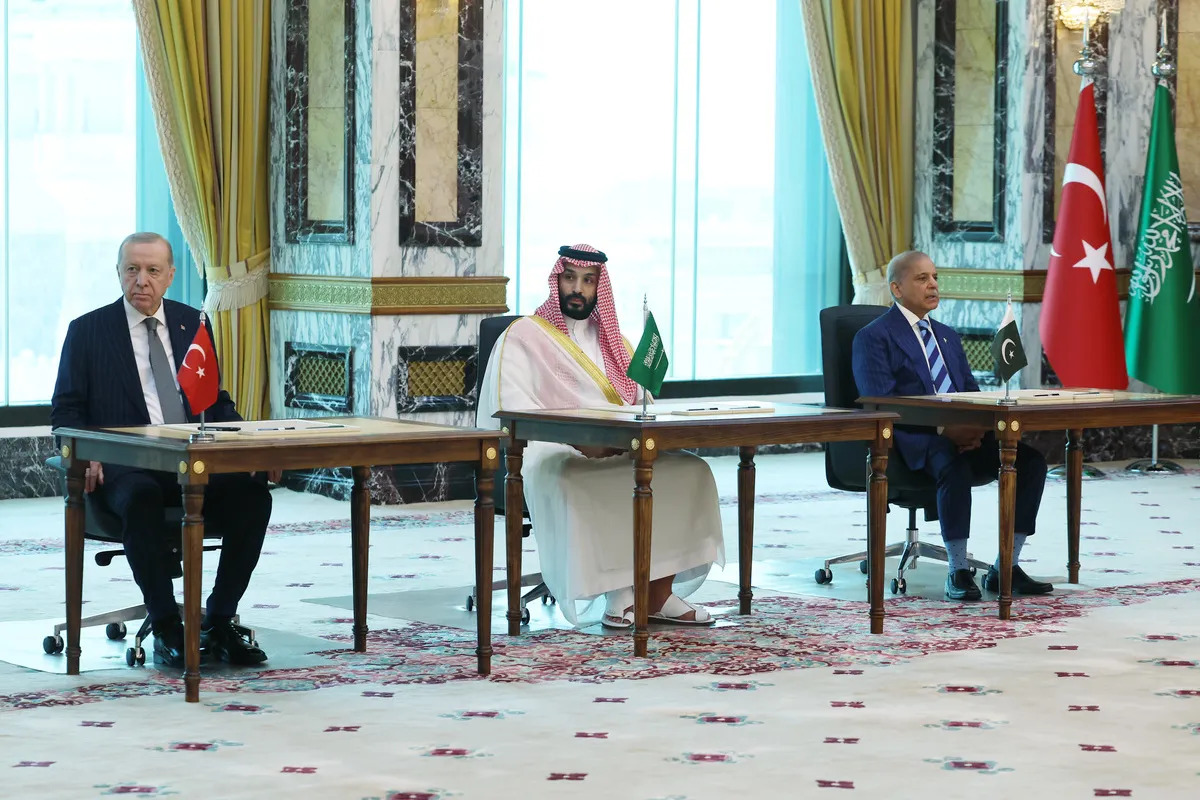
A REGION WHERE EVERYTHING IS CONNECTED
The Middle East has always occupied a central position in global politics.
But the strategic equation is changing.
Conflicts, rivalries and diplomatic confrontations are increasingly extending beyond national borders, while energy infrastructure and maritime routes have become strategic pressure points.
What happens in the region is no longer confined to the region.
It can affect oil prices, shipping, inflation, supply chains and the security calculations of governments thousands of kilometres away.
The Middle East is therefore becoming more than a theatre of conflict.
It is becoming one of the places where the next global order is taking shape.
HORMUZ: THE STRAIT THAT CAN MOVE THE WORLD
Few places demonstrate the strategic importance of the Middle East more clearly than the Strait of Hormuz.
The waterway connects the Persian Gulf with the Gulf of Oman and the wider Indian Ocean, making it one of the world's most important energy corridors.
Any prolonged disruption would have consequences far beyond the countries immediately surrounding it.
The strategic equation is simple:
GULF SECURITY → ENERGY SECURITY → GLOBAL ECONOMIC SECURITY
This is why every escalation around the Strait attracts the attention of Washington, Beijing, New Delhi, European capitals and financial markets.
A regional security crisis can quickly become a global economic crisis.
THE RED SEA IS PART OF THE SAME EQUATION
The Middle East's strategic geography does not end at the Persian Gulf.
The Red Sea is equally important.
The Bab el-Mandeb Strait connects the Red Sea with the Gulf of Aden and provides a critical maritime link between Europe and Asia.
Disruption in this corridor can force shipping companies to reconsider routes, increase transport times and raise costs across international supply chains.
The strategic chain stretches across continents:
ASIA → RED SEA → SUEZ → EUROPE
The Middle East is therefore not simply an energy crossroads.
It is also a global logistics crossroads.
SAUDI ARABIA FACES A STRATEGIC TEST
Saudi Arabia is at the centre of another major transformation.
Riyadh is attempting to diversify its economy, attract international investment and reduce its long-term dependence on hydrocarbons.
But economic transformation requires stability.
Regional instability creates a direct contradiction.
The kingdom wants to become a global investment, tourism and technology hub while operating in one of the world's most strategically volatile environments.
This is forcing Saudi Arabia to think beyond traditional security relationships.
The question is no longer simply how to protect its territory.
It is how to protect its economic transformation.
THE GULF STATES ARE DIVERSIFYING THEIR OPTIONS
For decades, Gulf security depended heavily on the United States.
That relationship remains fundamental.
But the regional environment is changing.
The Gulf states are increasingly developing relationships with several major powers simultaneously.
The objective is not necessarily to replace Washington.
It is to create strategic room for manoeuvre.
China is an increasingly important economic partner.
India has growing energy and commercial interests.
European countries remain significant investors and trading partners.
And regional governments are attempting to ensure that their security and economic futures are not dependent on a single external power.
This is one of the clearest signs of the emerging multipolar Middle East.
IRAN REMAINS AT THE CENTRE
Iran remains one of the region's most consequential powers.
Its geographical position gives it influence over the Persian Gulf, the Strait of Hormuz and connections between the Middle East and Central Asia.
Its regional relationships also extend its influence far beyond its borders.
But Tehran faces a difficult strategic environment.
It must balance confrontation with deterrence, regional influence with economic pressure, and military strategy with diplomacy.
Iran's relations with Gulf states have also demonstrated that regional competition does not eliminate the possibility of dialogue.
The Middle East increasingly operates through a mixture of rivalry, negotiation and strategic ambiguity.
THE UNITED STATES IS BEING FORCED TO RECALIBRATE
Washington remains the most powerful external military actor in the Middle East.
But the region is testing the limits of American power.
The United States faces several competing objectives:
- protecting its allies;
- deterring Iran;
- securing maritime routes;
- protecting energy infrastructure;
- preventing a wider regional war;
- and avoiding an indefinite military commitment.
These objectives are increasingly difficult to reconcile.
The question facing Washington is therefore not whether it will remain involved.
It is what kind of involvement the next Middle East will require.
ISRAEL'S SECURITY CALCULUS IS CHANGING
Israel's strategic environment has also been transformed.
The country's security calculations are now connected to multiple theatres simultaneously: Iran, Lebanon, Gaza, Syria, the Red Sea and the wider regional balance.
The traditional concept of deterrence is being tested by a regional environment in which state and non-state actors operate across interconnected theatres.
For Israel, the challenge is therefore no longer simply preventing attacks.
It is managing a strategic environment in which multiple fronts can become connected within hours.
TURKEY WANTS A LARGER ROLE
Turkey occupies a unique geographical position.
It connects Europe, the Middle East, the Black Sea and Central Asia.
That geography gives Ankara strategic relevance well beyond its borders.
Turkey has sought to expand its diplomatic and economic influence while maintaining relationships with competing powers.
Its position illustrates another characteristic of the emerging Middle East:
Regional powers are becoming increasingly unwilling to act merely as supporting players in a system designed by larger powers.
They want their own strategic agendas.
CHINA IS CHANGING THE EQUATION
China's growing presence in the Middle East is one of the most important long-term developments.
Beijing's interests are primarily economic, but economics and geopolitics are increasingly difficult to separate.
China needs stable energy supplies.
It needs secure trade routes.
It wants access to markets.
And it is expanding relationships with countries across the Gulf and wider Middle East.
Beijing has also demonstrated an interest in diplomatic engagement.
The result is a Middle East in which American military influence coexists with growing Chinese economic influence.
That combination is helping create a more complex regional balance.
INDIA IS WATCHING THE GULF
India's relationship with the Middle East is equally strategic.
Millions of Indians have connections to Gulf economies, while the region remains critical to India's energy security and trade.
The Indian Ocean also links India's economic future directly to the security of Gulf and Red Sea shipping routes.
For New Delhi, the Middle East is therefore not a distant geopolitical theatre.
It is part of India's immediate strategic neighbourhood.
ENERGY IS BECOMING GEOPOLITICS
Oil and gas remain fundamental to the regional equation.
But energy geopolitics is changing.
The Middle East is simultaneously facing the long-term energy transition and continuing global dependence on hydrocarbons.
That creates a strategic paradox.
The world is investing heavily in renewable energy, electrification and alternative technologies.
Yet oil and gas remain essential to the global economy.
As a result, the region's energy infrastructure continues to possess enormous geopolitical importance.
The transition away from fossil fuels will not make Middle Eastern geopolitics disappear.
It may simply change the nature of the competition.
THE NEW BATTLE IS ALSO ECONOMIC
The Middle East is no longer defined only by oil.
Saudi Arabia, the UAE, Qatar and other regional economies are investing heavily in infrastructure, technology, finance, tourism, logistics and artificial intelligence.
The region wants to become a bridge between continents.
Europe.
Asia.
Africa.
And the wider Global South.
That ambition is transforming the Gulf from an energy centre into a potential global economic hub.
THE OLD ALLIANCES ARE NOT DISAPPEARING
The emergence of a multipolar Middle East does not mean that existing alliances are collapsing.
It means they are becoming more complicated.
The United States remains deeply connected to regional security.
China is expanding its economic influence.
Russia maintains relationships across several regional theatres.
European countries retain economic, diplomatic and security interests.
Regional powers are building their own networks.
The Middle East is therefore moving from a relatively clear hierarchy towards a more complicated system of overlapping partnerships.
DIPLOMACY HAS BECOME A STRATEGIC WEAPON
One of the most interesting developments in the region is the growing importance of diplomacy itself.
Countries that remain strategic competitors can still negotiate.
Governments can cooperate economically while disagreeing on security.
Rivals can maintain communication channels even during periods of extreme tension.
This creates a new regional reality:
CONFRONTATION DOES NOT NECESSARILY MEAN THE END OF DIALOGUE.
In fact, dialogue may become more important precisely because the consequences of escalation are becoming greater.
THE MIDDLE EAST IS BECOMING MULTIPOLAR
The region is no longer easily described through a simple division between allies and enemies.
There are now multiple centres of power.
UNITED STATES — military reach and security alliances.
CHINA — trade, investment and energy relationships.
IRAN — regional influence and strategic depth.
SAUDI ARABIA — economic transformation and regional leadership.
TURKEY — geographic reach and strategic autonomy.
ISRAEL — military and technological capabilities.
UAE AND QATAR — finance, diplomacy and international connectivity.
The result is a Middle East in which power is increasingly distributed.
WHAT IS AT STAKE
The consequences extend far beyond the region.
If maritime routes remain secure, global trade can continue to function.
If energy infrastructure remains protected, markets can stabilise.
If diplomacy succeeds, regional powers can pursue economic transformation.
If escalation continues, the consequences could spread through:
ENERGY → TRADE → INFLATION → MARKETS → SECURITY → GLOBAL POLITICS
This is why the Middle East matters to virtually every major economy.
THE REGION THAT CAN SHAPE THE WORLD
The Middle East is entering a new strategic era.
Its importance no longer rests exclusively on oil.
It rests on geography.
Energy.
Technology.
Trade.
Finance.
Military power.
Diplomacy.
And the ability to connect some of the world's most important economic corridors.
The Gulf connects Asia with Europe.
The Red Sea connects the Indian Ocean with the Mediterranean.
The region sits between three continents.
And its governments increasingly understand the value of that position.
FOSTER! ANALYSES
The Middle East is not simply being transformed by the emergence of a new global order.
It is helping to create it.
The traditional balance — dominated by American security guarantees and regional rivalries — is giving way to something more complex.
China is expanding its economic role. Gulf states are diversifying their partnerships. Iran remains a major strategic actor. Turkey is seeking greater autonomy. Israel is confronting a more interconnected security environment. India is becoming increasingly important to the region's economic future.
At the same time, the world's dependence on Middle Eastern energy and maritime routes remains enormous.
The defining challenge will be whether the region can manage this growing competition without allowing it to become a permanent cycle of escalation.
Because the Middle East is no longer merely a crossroads between continents.
It is becoming one of the principal crossroads of the 21st century — and one of the places where the next global order will be decided.
FOSTER! NEWS
Clear facts. Real context.