

October 7: three years on, Israel remembers the lives shattered by the Hamas massacre
Memorial ceremonies were held in devastated communities, at former battle sites and in public spaces across the country. As families remembered their loved ones, survivors and demonstrators called for answers, accountability and an independent investigation into the security failures that preceded Hamas's 2023 attack.
FOSTER! NEWS | MIDDLE EAST
OCTOBER 9, 2026
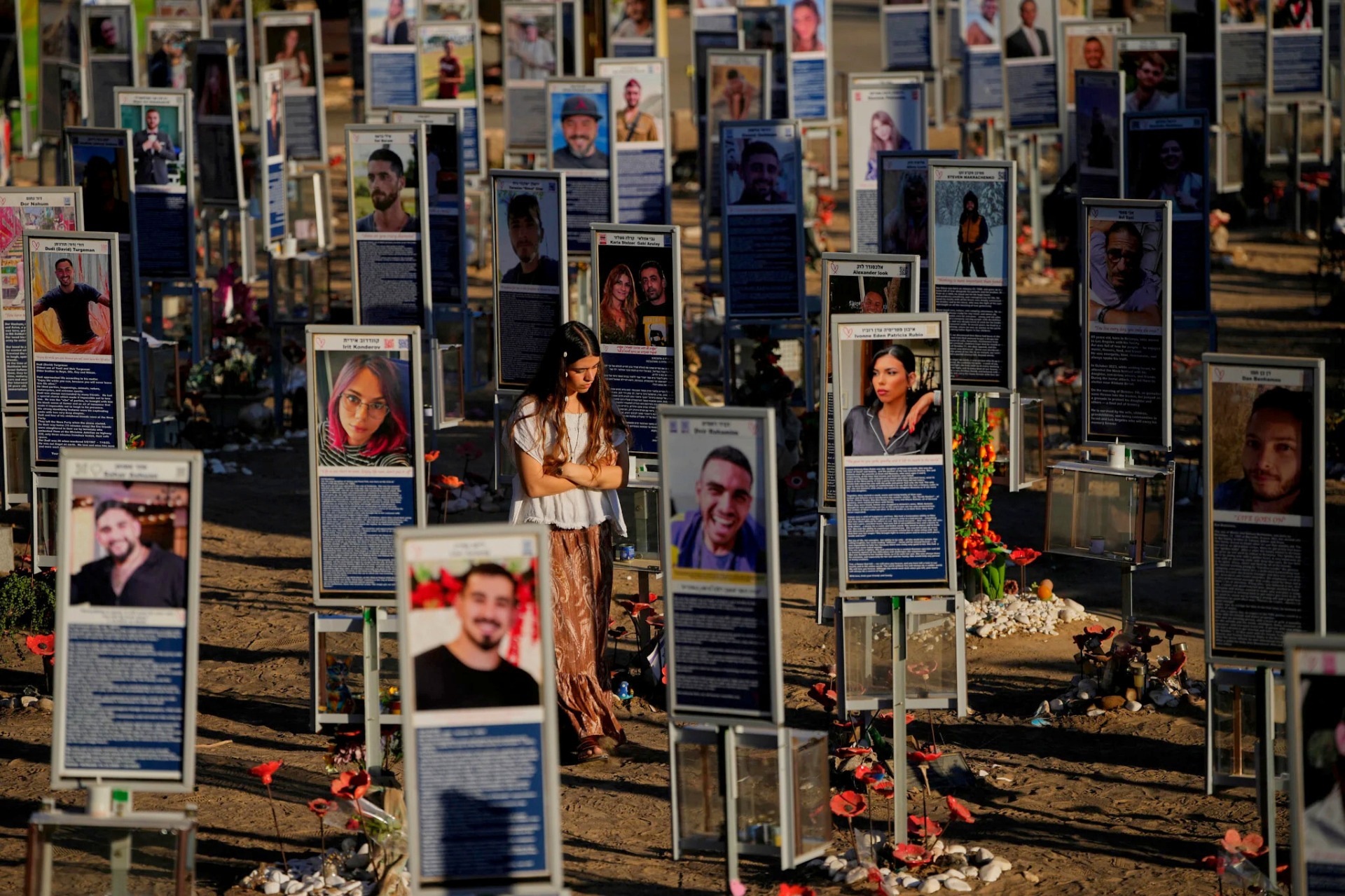
THREE YEARS LATER, ISRAEL REMEMBERS THE OCTOBER 7 ATTACK
Israel marked the third anniversary on Wednesday, October 7, of the attack launched from the Gaza Strip on October 7, 2023. The Hamas-led assault left approximately 1,200 people dead and 251 people abducted and taken to Gaza, according to the figures cited in the source material.
The attack, widely described as the deadliest day for the Jewish people since the Holocaust, marked the beginning of a war that spread across multiple fronts and profoundly changed Israel's security environment and the wider Middle East.
Three years later, commemorations were shaped by the memory of those killed, the suffering of survivors, the circumstances facing affected families and continuing demands for an explanation of the failures that allowed the assault to take place.
Events were held in cities and communities throughout the country. In many affected communities, families returned to places where their loved ones had been killed or abducted. Elsewhere, memorial ceremonies took place alongside protests against the government and calls for an investigation into the political and military decisions made before the attack.
Although Israel's official state commemoration follows the Hebrew calendar, with government ceremonies held on October 5 this year, numerous municipalities, organisations and civic groups also marked the anniversary on October 7, according to the Gregorian calendar.
6:29 A.M.: THE MOMENT THE INVASION BEGAN
The commemorations began at 6:29 a.m., the time identified as the start of the October 7, 2023, incursion.
That moment once again focused attention on the communities affected by the attack and the families of those killed or abducted. In central Israel, anti-government demonstrators briefly blocked the Ayalon Highway to observe a minute of silence.
Gatherings also took place at junctions and outside the homes of government ministers. The protests reflected demands for political accountability over the security failures that preceded the assault.
In Tel Aviv, activists dyed the water in the fountain at Dizengoff Square red. The symbolic intervention formed part of the actions organised to mark the anniversary.
At noon, the October Council, an organisation comprising survivors of the attack and bereaved families, called for a nationwide minute of silence.
The day included ceremonies in several communities, with further events scheduled for the afternoon and evening. These included a gathering at Kibbutz Re'im, near the site of the Nova music festival, and a national memorial organised by the Kumu organisation, whose name means "Rise Up", at Yarkon Park in Tel Aviv.
KFAR AZA: RETURNING TO A COMMUNITY SCARRED BY TRAGEDY
At Kibbutz Kfar Aza, one of the communities attacked during the incursion, residents held a vigil in memory of those who were killed.
The ceremony was marked by silence, the solemn sound of a trumpet and the reading of the victims' names. It brought together members of a community still confronting the human and social consequences of the attack.
Zion Regev, a community leader at the kibbutz, said most residents remained displaced and that many had yet to return to their homes.
Regev described the day as particularly difficult for the community, three years after the killings and abductions.
The situation in Kfar Aza illustrates one of the attack's most enduring consequences: the disruption of everyday life in numerous communities along the Gaza border. Recovery in these areas depends not only on rebuilding homes and infrastructure, but also on security conditions and whether residents can safely return.
Among those who visited the kibbutz were former Defence Minister Yoav Gallant, who held the post at the time of the attack, and Avigdor Liberman, leader of the Yisrael Beytenu party.
NAHAL OZ: TRIBUTE TO THE FEMALE SURVEILLANCE SOLDIERS KILLED IN THE ATTACK
Another major ceremony honoured the 16 female surveillance soldiers killed at the Nahal Oz military outpost.
Their families gathered at a memorial to pay tribute to the young soldiers and call for full recognition of their actions during the hours of the assault.
Dror Ashram, whose daughter, Sergeant Shay Ashram, was among those killed, recalled the moment the attack began and questioned the lack of protection afforded to the soldiers.
Ashram said the families could not forgive the loss of their daughters and demanded answers about what had happened. His remarks reflected both their grief and their calls to establish the circumstances surrounding the decisions made before the assault and the response during the fighting.
According to the figures cited in the source material, 53 soldiers were killed at the Nahal Oz outpost: 31 combat troops and 22 non-combat personnel, including the 16 female surveillance soldiers. Another ten people were abducted: seven female surveillance soldiers and three tank soldiers.
Military investigations have described the battle at the outpost as one of the most serious failures by the Israel Defense Forces (IDF) during the October 7 attack.
PRIOR WARNINGS AND QUESTIONS OVER SECURITY FAILURES
The case of Nahal Oz has also focused attention on information available to the authorities before the offensive.
According to the source material, surveillance soldiers had issued alerts about training and preparations by attackers that could have indicated an impending incursion. Those warnings did not receive an adequate response, according to the accounts and reports cited.
Some of the soldiers, most of whom were women, said their warnings had been dismissed and suggested that gender bias may have influenced how their reports were assessed.
These claims form part of a broader set of questions: what information was available before the attack, who received the warnings, how they were evaluated and why sufficient measures were not taken to prevent the incursion or reduce its consequences.
The anniversary once again placed those questions at the centre of public debate. Establishing individual and institutional responsibility, however, requires examining the records, operational decisions and findings of the relevant investigations.
FAMILIES DEMAND RECOGNITION AND ANSWERS
During the ceremony for the soldiers killed at Nahal Oz, Ashram highlighted several forms of courage that he said had been demonstrated during the attack.
He recalled those who tried to reassure their fellow soldiers, help others say goodbye to their families and continue reporting the movements of attackers despite the danger.
He also called on the IDF to recognise the bravery demonstrated by the soldiers and the role they played during the fighting.
His remarks went beyond the memorial itself. They reflected a demand that the victims be remembered not only for the circumstances of their deaths, but also for the decisions they made and the actions they took during the emergency.
At the anniversary events, remembrance of those killed therefore went hand in hand with demands to establish how events unfolded and what measures should be taken to prevent a similar tragedy.
POLICE HONOUR OFFICERS KILLED IN SOUTHERN ISRAEL
The Israel Police also held ceremonies to honour officers killed during the assault.
One of the main events took place at the police station in Sderot, the scene of an especially violent confrontation on October 7, 2023.
According to the account cited in the source material, the attackers killed 20 police officers at the station before barricading themselves inside and exchanging heavy fire with security forces. Other officers were killed in separate battles across southern Israel.
The commemorations highlighted the reach of the assault beyond residential communities and the locations where civilian events were taking place. Police stations and military installations were also attacked, as security personnel attempted to contain the incursion and respond to multiple sites of violence.
OPPOSITION LEADERS VISIT SITES OF THE MASSACRE
Israeli opposition leaders visited locations affected by the attack in the south and met bereaved families and community members.
Gadi Eisenkot, leader of Yashar, visited a roadside shelter in Re'im. He was accompanied by Shira Shapira, a member of his party's slate, whose son, Staff Sergeant Aner Shapira, was killed while defending the shelter during the attack.
According to the account cited in the source material, the young soldier threw seven grenades back outside after attackers hurled them into the shelter.
Naftali Bennett, leader of B'Yachad, also visited the site of the Nova music festival after spending the night at a kibbutz near the border.
Bennett said he was surrounded by families and friends united by grief and remembrance.
The opposition leaders' visits took place against a backdrop of criticism of the government and demands for accountability.
BEN GVIR WARNS AGAINST A SIMILAR ATTACK
While opposition leaders visited affected communities, National Security Minister Itamar Ben Gvir marked the anniversary near the security barrier close to Nitzanei Oz, in central Israel.
Ben Gvir held the same ministerial post during the October 7 attack. In his remarks, he warned of the possibility of a similar assault originating in the West Bank and said Israel must not repeat past mistakes.
The minister referred to towns including Netanya and Kfar Saba and called for the disarmament and dismantling of the Palestinian Authority, the body that exercises governing functions in parts of the West Bank.
His comments reflected one position in Israel's post-October 7 security debate: the argument for tougher measures against potential threats originating from Palestinian territories.
The proposal to dismantle the Palestinian Authority is Ben Gvir's stated political position and should not be confused with a decision adopted by the Israeli government as a whole.
YARDEN BIBAS: "I'M SORRY. I LOVE YOU"
One of the most painful testimonies of the day came from Yarden Bibas, a former hostage whose wife, Shiri, and two young sons, Ariel and Kfir, were abducted and died while held in Gaza.
Bibas posted a message on social media addressed to his family, expressing his pain at having survived while they did not return alive.
"Shiri, Ariel and Kfir. I'm sorry. I'm sorry that you are up there and I am here. I love you more than anything in the world. Always. Forever," he wrote.
Bibas was released in 2025 as part of a ceasefire agreement with Hamas. The bodies of his wife and children were also returned under the same agreement.
According to the source material, an Israeli autopsy determined that the three had been murdered by their Hamas captors.
Bibas's message once again highlighted the suffering of families affected by the abductions and the personal consequences that remain long after hostages are released or bodies are returned.
His testimony was not centred on political debate, but on the loss of his wife and children and the pain of a family whose story became linked to one of the most distressing episodes of the attack.
EINAV ZANGAUKER CALLS FOR AN INDEPENDENT INQUIRY
Einav Zangauker, the mother of Matan Zangauker, who was abducted on October 7, again criticised the government over what happened before and during the offensive.
Zangauker became one of the most prominent voices in the movement of hostage families calling for the captives' release. During the anniversary, she accused the government of failing to take full responsibility for the security failures and criticised the absence of an independent commission of inquiry.
Speaking to Army Radio, she said there were attempts to make people forget what had happened and insisted that the families would continue to demand the truth.
Her call is aimed at clarifying the political, military and intelligence decisions that preceded the attack, as well as the authorities' response during the emergency.
According to the source material, Matan Zangauker was released under the October 2025 agreement that brought large-scale fighting in the Gaza Strip to an end. His partner, Ilana Gritzewsky, had been released in November 2023.
The demand for an independent inquiry became one of the central themes of the protests and statements accompanying the anniversary. For the families, commemoration does not replace the need to establish responsibility, nor does it answer the questions that remain unresolved.
REMEMBERING THE VICTIMS WHILE DEBATING ACCOUNTABILITY
The third anniversary of October 7 brought together two inseparable dimensions of the day in Israel: tributes to the victims and debate over the failures that preceded the attack.
In the affected kibbutzim, families remembered those who were killed or abducted. At military bases and police stations, ceremonies honoured soldiers and officers who died during the fighting. In public squares and outside ministers' homes, demonstrators called for political and institutional answers.
The day also highlighted the continuing consequences of the attack for displaced families, survivors and those still seeking clarification about what happened.
Three years later, the ceremonies provided an opportunity to remember the victims, while calls for an independent investigation and accountability for security failures remained central to public debate in Israel.
FOSTER! NEWS
Clear facts. Real context.