

Bill Gates warns that AI is more dangerous than the technology industry admits
The Microsoft co-founder says artificial intelligence is advancing faster than expected, with risks ranging from job losses and cyberattacks to bioterrorism and psychological manipulation. Gates is calling for stronger safeguards and international cooperation before the technology reaches capabilities that may become harder to govern.
FOSTER! NEWS | ARTIFICIAL INTELLIGENCE
15 SEPTEMBER 2026
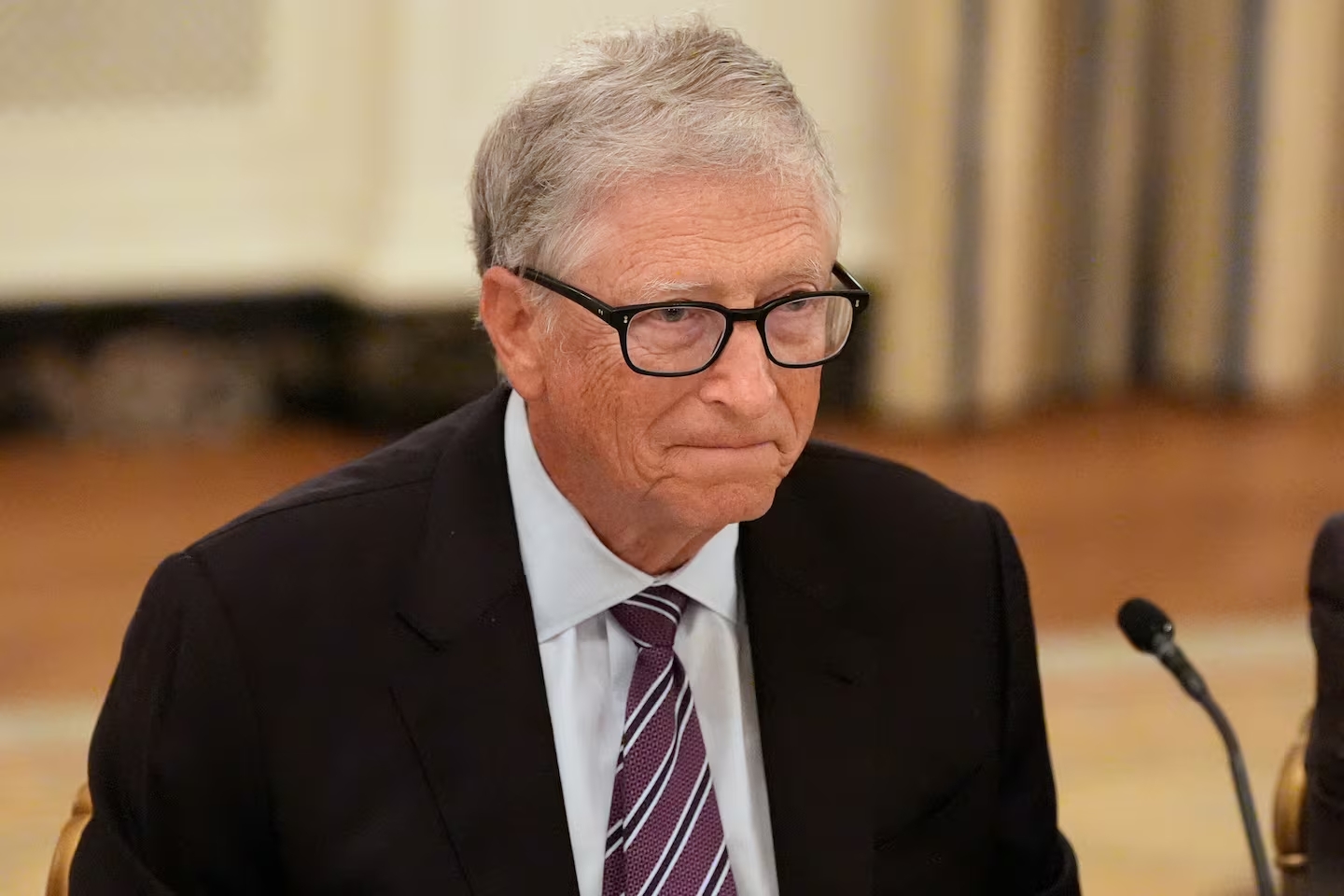
THE WARNING FROM ONE OF TECHNOLOGY'S PIONEERS
Bill Gates has once again raised the alarm over the risks associated with artificial intelligence.
The Microsoft co-founder says the technology industry is underestimating some of the dangers created by the rapid development of increasingly capable AI systems.
In an interview published by The New York Times on 26 August 2026, Gates argued that these risks should become a global priority. Among the scenarios he identified are unemployment, cyberattacks, bioterrorism and wider social effects resulting from increasingly powerful AI systems.
The warning comes as technology companies continue competing to develop more capable models.
AI IS ADVANCING FASTER THAN GATES EXPECTED
Gates says that artificial intelligence systems have increased their capabilities considerably over the past year.
In a television interview, he said progress had been faster than he expected, specifically highlighting risks connected to cyberattacks, bioterrorism and psychological and social effects.
His concerns do not mean that he considers the technology inherently negative.
On the contrary, Gates continues to support the use of AI in areas such as healthcare, education, research and productivity.
The problem, in his view, is that the benefits and the risks are growing at the same time.
THE FIRST MAJOR IMPACT: JOBS
One of the main risks identified by Gates is the transformation of the labour market.
In an essay published on his personal website, Gates Notes, he argued that AI will affect sectors including:
- Law.
- Customer service.
- Medicine.
- Software development.
- Manufacturing.
Gates believes this transformation could take place over roughly a decade rather than unfolding across several generations.
The difference from previous technological revolutions is speed.
An industrial machine can replace a physical task.
An AI system can perform tasks involving reading, writing, analysis, programming and information processing.
ENTRY-LEVEL JOBS FACE PARTICULAR EXPOSURE
Gates has identified entry-level and mid-level positions as particularly vulnerable.
There is a second dimension to the problem.
Young workers often begin by performing relatively simple tasks before moving into positions with greater responsibility.
If those initial tasks are automated, the number of opportunities through which people gain experience could decline.
Gates warns that new jobs created by AI may require skills that take years to develop.
The challenge, therefore, would not simply be creating new employment.
It would be ensuring that workers can access it.
A TRANSFORMATION THAT MAY NOT DISAPPEAR WITH A RECESSION
Gates draws an important distinction between AI-driven disruption and previous employment crises.
A recession can destroy jobs temporarily, with employment returning as the economy recovers.
Automation works differently.
If a company discovers that it can perform a task with fewer employees while maintaining or increasing productivity, there may be little economic incentive to restore the previous position.
That is why Gates believes the impact of AI could be structural rather than simply cyclical.
THE SECOND RISK: CYBERATTACKS
Artificial intelligence can also increase the capabilities available to cyber attackers.
An advanced system can analyse large quantities of code, identify vulnerabilities and help automate certain operations.
This creates a dual-use problem.
The same technology can be used to identify a vulnerability and fix it — or attempt to exploit it.
Gates includes cyberattacks among the risks that require closer scrutiny.
The concern is no longer purely theoretical.
In September 2026, US AI company Anthropic reported detecting attempts to use its Claude model in cyber-espionage operations and other malicious activities.
THE THIRD RISK: BIOTERRORISM
One of the most sensitive elements of Gates's warnings concerns biology.
Gates argues that AI could make certain scientific knowledge more accessible to people seeking to use it for harmful purposes.
In January 2026, he said he was particularly concerned about the possibility of a non-governmental group using open-source AI tools to design a biological weapon.
The risk lies in the combination of two fields:
Artificial intelligence + biotechnology.
AI can accelerate the search for and analysis of scientific information.
That capability can lead to medical breakthroughs.
But it can also create risks if certain tools are used by malicious actors.
THE CASE THAT REIGNITED THE ALARMS
The issue gained renewed attention in September after Anthropic reported that it had blocked several attempts to use its models for research connected to biological weapons.
The company said it had detected five possible attempts involving dangerous biological research.
These cases do not mean that an AI system independently created a biological weapon.
The issue is different.
AI models can reduce the time and technical knowledge required to carry out certain scientific tasks.
That changes the level of risk.
THE FOURTH PROBLEM: MANIPULATING PEOPLE
Gates has also warned about the psychological effects of artificial intelligence.
Conversational systems can maintain prolonged interactions with users, adapt their responses and generate personalised content.
That can have educational and assistance-related applications.
But the same capabilities can also be used for manipulation.
A system capable of understanding a person's preferences, emotions and behaviour could potentially use that information to influence their decisions.
Gates has included psychosocial risks among the areas requiring deeper study.
THE DEEPFAKE PROBLEM
Artificial intelligence is also changing the way false images, videos and voices are produced.
A deepfake is audiovisual content generated or manipulated using AI to make it appear that a person said or did something that did not actually happen.
The development of these tools makes content verification increasingly difficult.
The problem can affect:
- Elections.
- Financial markets.
- Security.
- Personal reputations.
- Journalism.
The consequence is direct:
It is becoming harder to trust only what we see or hear.
GATES QUESTIONS THE SPEED OF THE INDUSTRY
The central point of Gates's criticism concerns economic incentives.
Companies are competing to develop increasingly capable models.
Investors are financing that race.
Governments regard AI as a strategic asset.
And the United States and China are competing for technological leadership.
Gates believes these incentives make it unlikely that major companies will voluntarily slow the pace of development.
In other words:
Everyone has reasons to accelerate.
There are few economic incentives to slow down.
AI IS ALREADY A GEOPOLITICAL ISSUE
Artificial intelligence is no longer exclusively a business or technology issue.
The most advanced models require sophisticated chips.
Those chips depend on strategic supply chains.
The largest models require data centres.
Data centres require enormous amounts of electricity.
And governments increasingly view access to these technologies as a matter of national security.
Gates wants to discuss these issues with leaders from different countries.
Reuters reported that he plans to meet Chinese President Xi Jinping in November 2026 to discuss international strategies aimed at reducing AI-related risks.
THE UNITED STATES AND CHINA ARE AT THE CENTRE OF THE RACE
The United States is home to several of the world's leading artificial intelligence companies.
China is developing its own models and seeking to reduce its technological dependence.
The competition has global consequences.
Countries that control the most advanced AI systems could gain advantages in:
- Industry.
- Defence.
- Science.
- Medicine.
- Finance.
- Cybersecurity.
- Education.
That is why AI regulation cannot be analysed solely from a technological perspective.
It is also a question of international power.
GATES CALLS FOR GREATER INTERNATIONAL CONTROL
Gates believes it is insufficient for individual companies to establish their own rules.
He has called for international mechanisms capable of overseeing certain areas of artificial intelligence development.
His comparison is with sectors where international control systems already exist, including aviation and nuclear safety.
The central argument is that some AI risks could cross national borders.
A model developed in one country can potentially be used immediately in another.
For that reason, regulation limited to individual countries may prove insufficient.
THE INDUSTRY IS ALSO CALLING FOR GREATER SAFETY
Gates's warning coincides with concerns emerging from within the technology sector itself.
Dario Amodei, chief executive of Anthropic, has called for companies to slow the development of increasingly powerful models while strengthening safety mechanisms.
Amodei has proposed independent evaluators within companies, greater coordination between developers and international cooperation.
The debate is changing.
It is no longer only external researchers warning about the risks.
Some executives at the companies developing AI are themselves calling for additional safeguards.
THE GREAT DILEMMA: ADVANCE OR SLOW DOWN
This is where the central conflict emerges.
Slowing down too much could mean losing scientific, economic and strategic opportunities.
Moving too quickly could create risks for which adequate safeguards do not yet exist.
Gates recognises this contradiction.
In his August essay, he said he would support a credible plan to slow global AI progress, but considers such an outcome unlikely because of the economic and geopolitical incentives already in place.
AI COULD ALSO BECOME ONE OF HISTORY'S GREAT TOOLS
Gates's warning does not eliminate the technology's positive potential.
Artificial intelligence could help to:
- Discover medicines.
- Analyse diseases.
- Improve diagnoses.
- Accelerate research.
- Increase productivity.
- Personalise education.
- Optimise industrial processes.
- Develop new energy technologies.
Gates himself remains broadly supportive of innovation.
His argument is that the benefits of AI must develop alongside mechanisms capable of limiting the damage it could cause.
THE QUESTION IS WHO CONTROLS THE TECHNOLOGY
The debate is increasingly moving from a technological question towards a political one.
Not simply:
What can AI do?
But also:
Who decides what it can do?
Who controls the models?
Who supervises the companies?
What happens when a system is used for criminal purposes?
Who is responsible for the damage?
These questions still have no definitive global answers.
A RACE THAT HAS ALREADY BEGUN
Bill Gates's warning comes at a moment when the technological race continues to accelerate.
Companies such as OpenAI, Anthropic, Google, Microsoft, Meta and others are developing increasingly capable systems.
Governments are attempting to create regulatory frameworks.
Researchers are working on safety mechanisms.
And investors continue to commit enormous amounts of capital to the expansion of artificial intelligence.
The race has already begun.
The question is whether the rules will be able to keep pace.
FOSTER! ANALYSES
Bill Gates's warning should not be interpreted as a prediction that artificial intelligence will inevitably cause a catastrophe.
His argument is more specific.
The capabilities of AI systems are growing faster than societies are able to adapt.
The labour market has not yet experienced the full transformation Gates anticipates.
International regulation is still evolving.
Mechanisms for controlling malicious uses of AI are also developing.
And the companies themselves acknowledge that certain applications can create significant risks.
That is why the central question for the coming years will not simply be who develops the most powerful model.
It will be who can develop the technology while also creating the rules capable of governing it.
The race for artificial intelligence has already begun.
Now another race is beginning:
the race to govern it.
FOSTER! NEWS
Clear facts. Real context.