

Asia is becoming the centre of the new global order
Power, technology, trade and security are converging across Asia, turning the region into the decisive arena of a rapidly changing world.
FOSTER! NEWS | ASIA
15 SEPTEMBER 2026
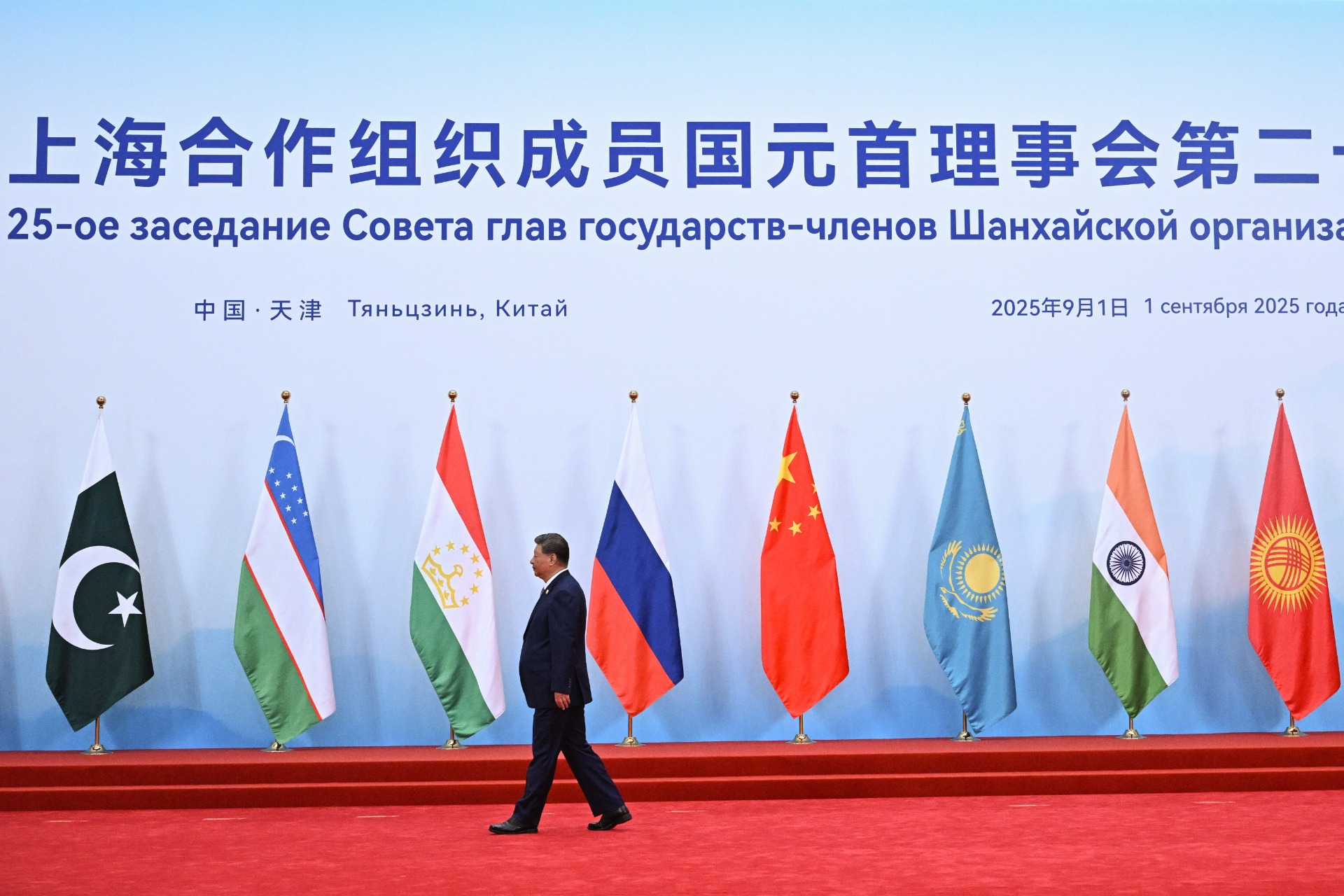
THE REGION WHERE THE FUTURE IS BEING DECIDED
For decades, Asia was described primarily as the engine of global economic growth.
That description is no longer enough.
Asia is now becoming one of the principal arenas where military power, artificial intelligence, semiconductors, energy, trade and competing visions of the international order are colliding.
China is expanding its economic and technological influence. India is asserting itself as an independent major power. Japan is reconsidering its strategic role. South Korea remains central to the global technology industry. Taiwan sits at the heart of the semiconductor system.
And across the Indo-Pacific, the balance between cooperation and confrontation is becoming increasingly fragile.
CHINA IS NO LONGER ONLY A MANUFACTURING POWER
China's economic transformation is entering another phase.
During the first half of 2026, Chinese exports grew strongly despite continuing trade tensions with the United States. Semiconductors, electronics, batteries and electric vehicles were among the forces driving that expansion. China's exports of intermediate goods rose particularly sharply, reinforcing its role not simply as a manufacturer of finished products, but as a supplier to other manufacturing economies.
The significance goes beyond trade statistics.
China is attempting to occupy a more strategic position in the global economy:
RAW MATERIALS → COMPONENTS → TECHNOLOGY → MANUFACTURING → GLOBAL MARKETS
The more stages of that chain Beijing controls, the greater its geopolitical leverage becomes.
THE BATTLE FOR TECHNOLOGY
The next great competition may not be fought primarily over territory.
It may be fought over chips, computing power, artificial intelligence, batteries, data and advanced manufacturing.
China's AI-related trade expanded rapidly in 2026, while its semiconductor and electronics imports also increased as demand for AI infrastructure accelerated.
At the same time, Taiwan remains indispensable to the advanced semiconductor ecosystem, while Japan and South Korea retain critical positions in materials, equipment, memory and advanced industrial technologies.
The strategic question is therefore becoming unavoidable:
Whoever controls the technologies of the next decade may influence the power structure of the entire century.
TAIWAN: THE FAULT LINE BETWEEN ECONOMICS AND SECURITY
Few places illustrate this transformation more clearly than Taiwan.
Its importance is not simply political or military.
It is technological.
The island sits at the centre of an advanced semiconductor ecosystem on which enormous parts of the global economy depend. That makes any deterioration in the Taiwan Strait potentially consequential far beyond East Asia.
The issue is no longer simply whether a conflict could occur.
The deeper question is what happens to the global economy if the world's most important technology supply chains become inseparable from military strategy.
INDIA WANTS TO BE A POWER OF ITS OWN
India is increasingly refusing to fit neatly into either a Western or Chinese geopolitical camp.
The recent meeting between Narendra Modi and Xi Jinping in New Delhi demonstrated both the possibility of a tactical thaw and the limits of the relationship. The two governments are attempting to stabilise ties after years of military tension, while fundamental disputes and strategic mistrust remain.
India's position is particularly important because New Delhi is simultaneously:
- expanding relations with the United States;
- strengthening its role in the Indo-Pacific;
- maintaining strategic autonomy;
- deepening economic relationships across Asia;
- and seeking greater influence in the Global South.
India does not appear interested in simply choosing one side.
It wants to become one of the sides.
JAPAN IS REDEFINING ITS STRATEGIC ROLE
Japan is also undergoing a profound transformation.
The traditional post-war model — economic strength combined with strategic restraint — is under increasing pressure from China's growing military capabilities, tensions around Taiwan and the broader deterioration of the regional security environment.
The relationship between Beijing and Tokyo has become increasingly entangled with history, military strategy and competing visions of the Indo-Pacific. Recent tensions have also demonstrated how historical narratives can become instruments of contemporary geopolitics.
For Japan, the question is no longer simply how to preserve prosperity.
It is how to preserve prosperity in an increasingly contested neighbourhood.
TRADE IS BECOMING A WEAPON
The old assumption was that economic interdependence would make major conflict less likely.
Today, interdependence itself can become a source of power.
Semiconductors, rare earths, batteries, energy supplies and critical industrial components are increasingly treated as strategic assets.
China's trade with other Asian economies has grown particularly strongly, with South Korea and Vietnam among the countries experiencing major increases in trade flows linked to electronics and AI-related components.
The map of globalisation is therefore changing.
It is no longer simply:
CHEAPER → FASTER → GLOBAL
It is increasingly:
SECURE → RESILIENT → STRATEGIC
THE INDO-PACIFIC IS BECOMING THE NEW GEOPOLITICAL CENTRE
From the South China Sea to the Taiwan Strait, from the Korean Peninsula to the Indian Ocean, a new strategic geography is emerging.
The United States remains a decisive military and economic power in the region.
China is challenging the existing balance.
India is expanding its influence.
Japan and South Korea are strengthening their strategic relevance.
ASEAN countries are attempting to preserve room for manoeuvre.
And Russia remains part of the wider equation.
The result is not a simple two-sided confrontation.
It is a complex contest involving multiple centres of power.
ENERGY IS PART OF THE EQUATION
Asia's strategic future also depends on energy.
Disruptions in the Middle East have already altered Asian energy flows. India, for example, has adjusted crude sourcing as instability around Gulf supplies has affected regional trade patterns.
This reveals another reality:
Asia's rise cannot be separated from the security of the sea routes connecting the Middle East, Indian Ocean and Pacific.
Energy security, maritime security and economic security are increasingly becoming the same conversation.
THE RISE OF A MULTIPOLAR ASIA
The most important transformation may be political.
Asia is not moving towards a single dominant model.
Instead, several powers are attempting to shape the future simultaneously.
China seeks greater influence over the regional and global order.
India wants strategic autonomy and a larger international role.
Japan seeks security without abandoning its economic position.
The United States wants to preserve its Indo-Pacific influence.
Smaller and middle powers want the freedom to cooperate with several sides without becoming subordinate to any of them.
This is the architecture of a multipolar Asia.
THE QUESTION THAT MATTERS
The defining question is no longer whether Asia will become more important.
It already has.
The real question is:
Will Asia become the centre of a new global order — or the place where competing powers collide over it?
The answer will affect much more than Asia.
It will influence global trade, technological development, financial markets, military alliances, energy security and the future of international institutions.
A NEW CENTRE OF GRAVITY
The 20th century was largely shaped by the rivalry between the United States and the Soviet Union, followed by a period of overwhelming American predominance.
The 21st century is becoming different.
Power is dispersing.
Economic weight is moving.
Technology is transforming strategic competition.
And Asia is increasingly at the centre of all three processes.
From China's factories to India's ambitions, from Japan's strategic transformation to Taiwan's semiconductor industry, the region is no longer simply responding to the global order.
It is helping to build the next one.
FOSTER! ANALYSES
Asia is entering a decisive phase.
The region combines enormous economic power with unresolved territorial disputes, technological competition, energy vulnerabilities and increasingly sophisticated military capabilities.
Yet confrontation is not inevitable.
The same networks that create strategic competition — trade, technology, investment and supply chains — also create powerful incentives to avoid catastrophic conflict.
The challenge for Asia will therefore be to manage competition without allowing competition to destroy cooperation.
Because the future of Asia will not remain in Asia.
The future of Asia is increasingly becoming the future of the world.
FOSTER! NEWS
Clear facts. Real context.