

Africa is rewriting its place in the world
From critical minerals and energy to security, trade and diplomacy, Africa is gaining strategic weight as global powers compete for influence across the continent.
FOSTER! NEWS | AFRICA
15 SEPTEMBER 2026
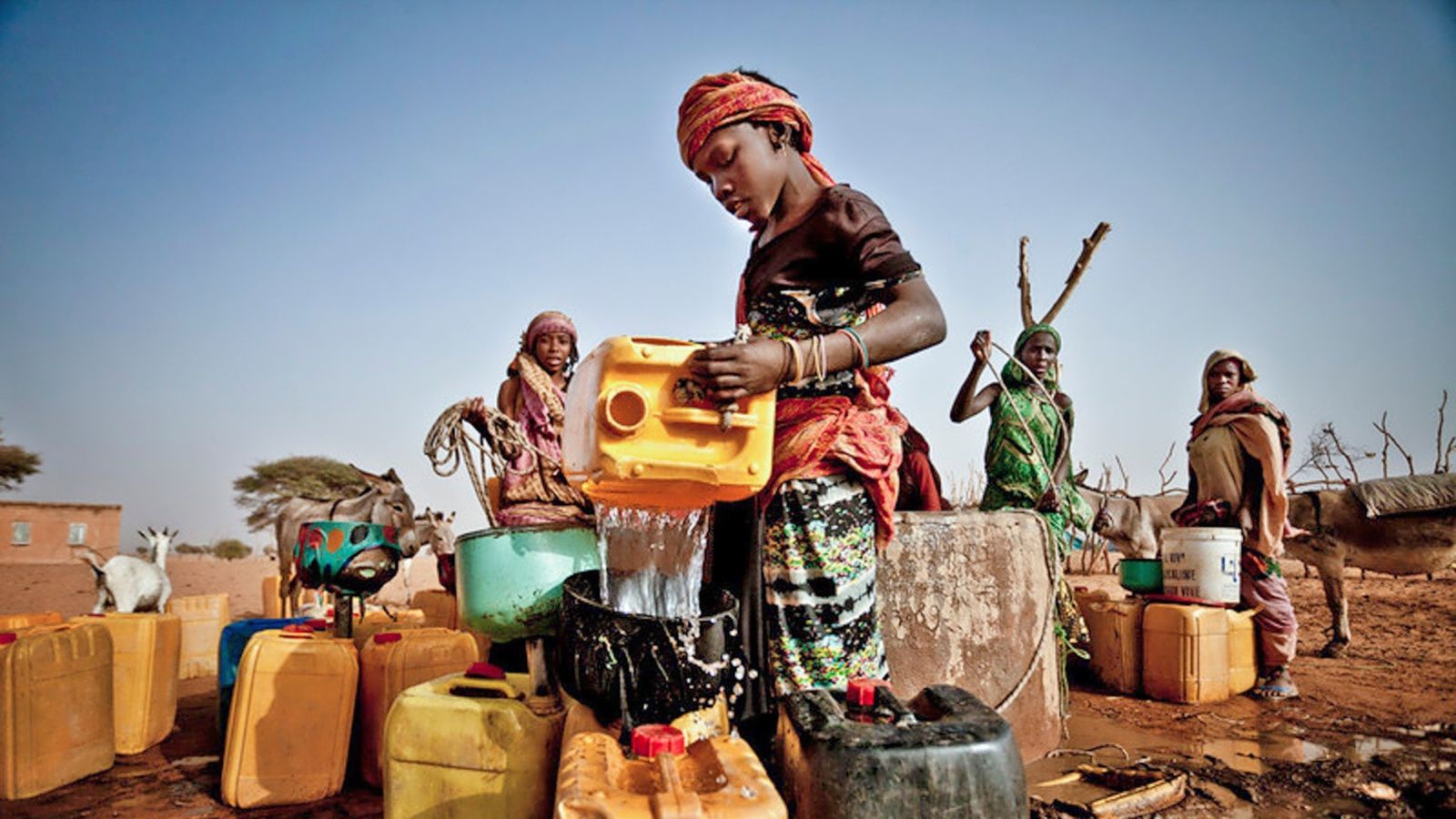
A CONTINENT NO LONGER ON THE SIDELINES
For decades, Africa was too often treated as a passive arena in international politics — a continent where outside powers competed for resources, markets and strategic influence.
That perception is becoming increasingly difficult to sustain.
Africa has a population of roughly 1.4 billion people, enormous reserves of critical minerals, major energy resources and some of the world's fastest-growing consumer markets.
Its strategic importance is also expanding.
China is deepening its economic presence. Russia is seeking greater political and security influence. Gulf states are investing in ports, agriculture and infrastructure. Europe is attempting to strengthen its partnerships. India and Turkey are expanding their relationships.
And African governments are increasingly seeking something more important than a new foreign patron:
strategic autonomy.
THE NEW SCRAMBLE FOR AFRICA
The competition for influence is becoming more sophisticated.
The old model was largely based on extracting raw materials.
The new competition is increasingly about who controls value chains, infrastructure, technology, logistics and access to markets.
Critical minerals are particularly important.
Copper, cobalt, lithium, manganese, graphite and other resources are essential to batteries, electric vehicles, renewable energy and advanced technologies.
This gives Africa something the world's major powers increasingly need.
Resources that are becoming strategic assets.
CHINA HAS A HEAD START
China remains one of the most important external economic actors on the continent.
Its influence has been built through decades of trade, infrastructure investment, financing and industrial partnerships.
The scale is significant.
China is not simply competing for political influence.
It has already built a substantial economic relationship with Africa.
The next question is whether that economic influence will increasingly translate into strategic power.
RUSSIA IS SEEKING A DIFFERENT KIND OF INFLUENCE
Russia's return to Africa has followed a different model.
Moscow has focused heavily on political relationships, military cooperation, security partnerships, mining and energy.
The strategy is clear:
SECURITY → RESOURCES → POLITICAL INFLUENCE
But Russia faces a major limitation.
Its economic footprint remains considerably smaller than China's or Europe's.
That means Moscow's ability to convert political relationships into long-term economic influence will depend increasingly on whether it can deliver investment rather than simply diplomatic commitments.
THE SAHEL IS A NEW GEOPOLITICAL FRONTIER
Few regions illustrate Africa's changing strategic landscape better than the Sahel.
Military governments in Mali, Burkina Faso and Niger have distanced themselves from traditional Western partners while strengthening relationships with Russia and other regional powers.
The result is a region where old alliances are being dismantled and new ones are being constructed.
But security remains a major challenge.
Political instability, armed groups, terrorism, economic fragility and weak institutions continue to limit the continent's ability to translate geopolitical attention into sustainable development.
AFRICA WANTS MORE THAN RAW MATERIALS
This may be the most important economic question facing the continent.
Africa has enormous natural resources.
But exporting raw materials without developing local processing leaves much of the economic value elsewhere.
The strategic opportunity is therefore not simply:
WHAT DOES AFRICA HAVE?
It is:
WHAT CAN AFRICA PRODUCE WITH WHAT IT HAS?
Developing local manufacturing, processing, technology and industrial capacity could fundamentally change the continent's position in the global economy.
That would transform Africa from a supplier of commodities into a participant in global value chains.
THE CRITICAL MINERALS QUESTION
The energy transition has made Africa even more strategically important.
The world needs enormous quantities of minerals to manufacture batteries, electric vehicles, power systems and advanced technologies.
Several African countries possess resources essential to that transformation.
But the competition over those resources raises another question:
Who controls the mines — and who controls what happens after extraction?
If Africa remains primarily an exporter of unprocessed resources, much of the value will continue to be captured elsewhere.
If African countries develop processing and manufacturing capacity, the balance could change dramatically.
THE GULF IS LOOKING SOUTH
The United Arab Emirates, Saudi Arabia and Qatar are also expanding their economic presence across Africa.
Their interests include:
- ports;
- logistics;
- agriculture;
- food security;
- energy;
- mining;
- infrastructure;
- finance.
The geography is logical.
The Gulf sits between Asia, Africa and Europe.
Africa provides markets, resources and strategic maritime positions.
Together, these factors create a powerful economic equation.
The competition for African infrastructure may therefore become as important as the competition for African minerals.
THE HORN OF AFRICA IS A STRATEGIC CROSSROADS
The Horn of Africa occupies one of the most important geographical positions on Earth.
It overlooks the Red Sea, the Gulf of Aden and the maritime routes connecting Asia with Europe.
Ports and transport corridors in the region are consequently becoming strategic assets.
The geopolitics of infrastructure is changing the way external powers approach Africa.
A port is no longer simply a port.
A railway is no longer simply a railway.
A logistics corridor can become an instrument of geopolitical influence.
SOUTH AFRICA AND THE RISE OF THE GLOBAL SOUTH
South Africa occupies a special position.
It is one of Africa's largest economies and a key member of BRICS.
The expansion of BRICS has given African countries additional platforms through which to engage with major emerging economies.
This matters because Africa is increasingly participating in institutions designed to reshape the balance of global power.
The continent is no longer simply being discussed by the Global South.
It is helping define what the Global South becomes.
THE AFRICAN UNION HAS A BIGGER ROLE TO PLAY
The African Union remains central to the continent's long-term strategic ambitions.
Its challenge is translating political unity into practical economic and security cooperation.
A more integrated African market could strengthen the bargaining position of individual countries.
A stronger continental infrastructure network could reduce dependence on external markets.
And coordinated resource strategies could allow African states to negotiate from a position of greater strength.
The fundamental question is whether Africa can transform its enormous size into collective strategic power.
THE DEMOGRAPHIC ADVANTAGE
Africa's greatest strategic asset may not be underground.
It may be its people.
The continent has one of the world's youngest populations.
That creates enormous potential for:
LABOUR → ENTREPRENEURSHIP → CONSUMPTION → INNOVATION → GROWTH
But demographics alone do not guarantee prosperity.
Young populations require education, infrastructure, employment, healthcare and functioning institutions.
If those conditions are created, Africa could become one of the world's most important economic growth centres.
If they are not, demographic growth could instead intensify social and political pressures.
AFRICA IS NEGOTIATING WITH EVERYONE
Perhaps the most important geopolitical transformation is that African governments increasingly have more options.
They can work with China.
They can work with Europe.
They can work with the United States.
They can work with Russia.
They can work with India.
They can work with Turkey.
They can work with the Gulf states.
And increasingly, they can attempt to negotiate with several of them simultaneously.
This is not necessarily neutrality.
It is strategic diversification.
THE NEXT BATTLE IS FOR INFLUENCE
The competition for Africa will not be decided by one country.
It will be determined by who can offer the most convincing combination of:
CAPITAL + TECHNOLOGY + SECURITY + INFRASTRUCTURE + MARKET ACCESS
Africa's governments increasingly understand their leverage.
They know that global powers need their resources.
They know that their markets are growing.
They know that geography matters.
And they know that competition between external powers creates opportunities to negotiate better terms.
WHAT IS AT STAKE
Africa's transformation could influence the global system in several ways.
It could reshape critical-mineral supply chains.
It could become a major centre for renewable energy.
It could expand global manufacturing.
It could transform maritime trade routes.
It could become an increasingly important consumer market.
And it could give the Global South greater political weight in international institutions.
But none of this is guaranteed.
Africa's strategic moment comes with enormous challenges.
Conflict.
Governance.
Infrastructure.
Debt.
Energy access.
Industrialisation.
And political instability.
A CONTINENT WITH OPTIONS
The old geopolitical question was:
Who controls Africa?
The emerging question is different:
How will Africa use the competition for Africa?
That distinction could define the continent's future.
The countries that succeed may be those that transform external interest into domestic industrial capacity, infrastructure, technology and employment.
The opportunity is not simply to attract investment.
It is to use investment to build lasting economic power.
FOSTER! ANALYSES
Africa is entering a moment of unusual strategic importance.
The continent is being courted by virtually every major centre of global power, but African governments are increasingly aware that they do not have to choose a single partner.
China brings enormous economic capacity.
Russia offers security and political partnerships.
Europe remains a major economic and geographical partner.
The Gulf states bring capital and logistics.
India offers another major emerging-market relationship.
The United States retains substantial diplomatic, economic and security influence.
But Africa's greatest opportunity may lie in turning this external competition into internal transformation.
The decisive battle will not be over who extracts Africa's resources.
It will be over whether Africa can capture more of the value created from them.
If it succeeds, the continent will not simply have a larger role in the global order.
It will help define the order itself.
FOSTER! NEWS
Clear facts. Real context.